Product Overview
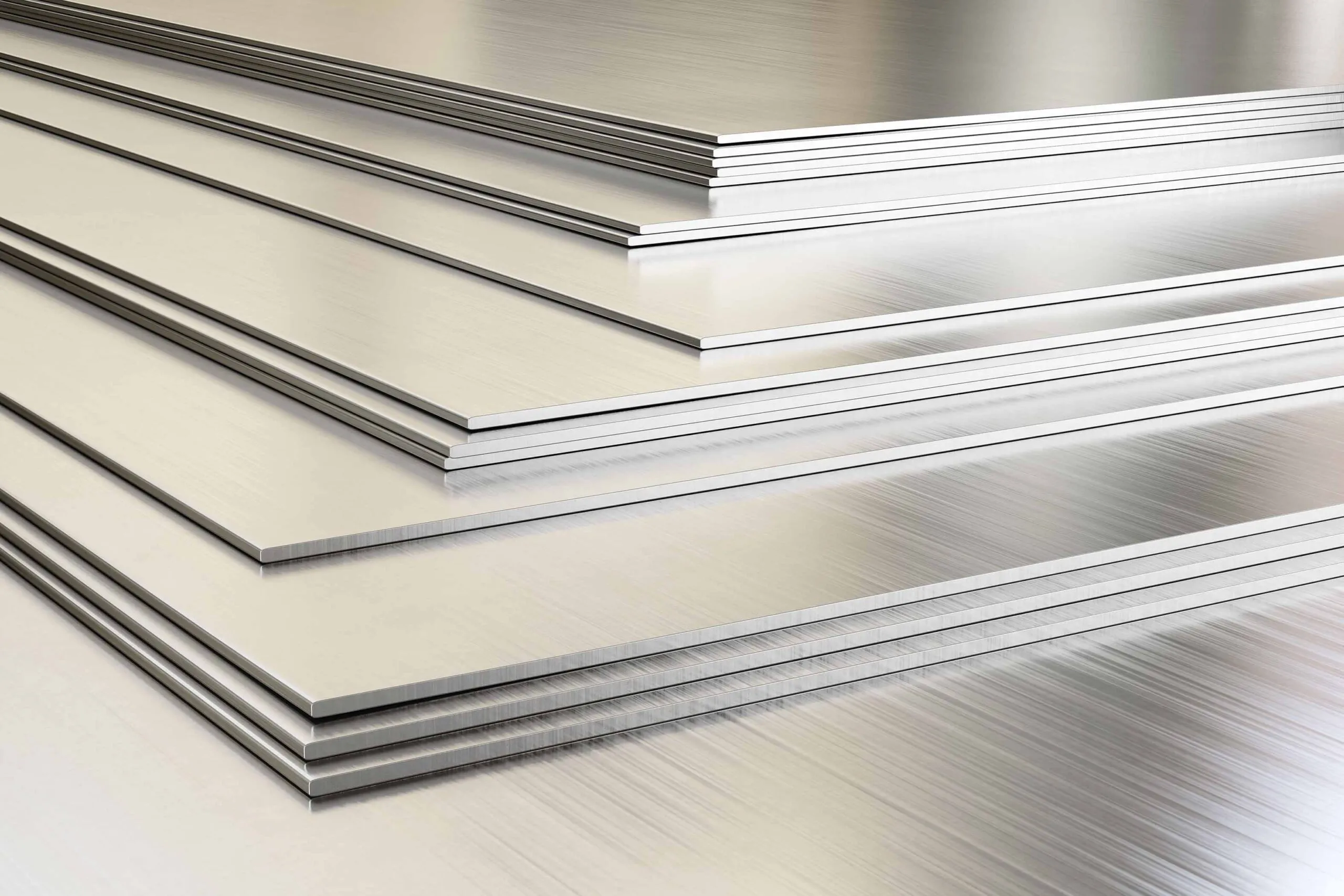
The carbon steel plate supply program is engineered to meet the stringent demands of heavy industrial fabrication, structural steelwork, and pressure vessel manufacturing. Plates are sourced and stocked from integrated mills that maintain ISO 9001 quality management systems, ensuring full traceability from ladle analysis to final mechanical testing. Each plate is supplied with an EN 10204 Type 3.1 inspection certificate, providing documented evidence of chemical composition and mechanical properties. For projects requiring additional verification, third-party inspection by classification societies including DNV-GL, Lloyd’s Register, and Bureau Veritas is offered, with surcharge pricing available upon request.
Dimensional Envelope and Cutting Capabilities
The dimensional envelope supported covers thicknesses from 6 mm to 300 mm, with widths ranging from 1,500 mm to 4,000 mm and lengths up to 18,000 mm. For non-standard sizes, coordination directly with mills produces custom dimensions within a tolerance of ±2 mm on width and ±5 mm on length per EN 10029 Class A. Thickness tolerances follow EN 10029 Class B for plates up to 250 mm, and ASTM A6/A6M for A36 and A572 grades. In-house cutting services—flame, plasma, laser, and waterjet—allow delivery of net-shape blanks with edge quality suitable for direct welding or machining, reducing secondary processing costs by up to 15% on typical structural projects.
Stock Grades and Inventory Management
A rotating inventory of common structural grades including Q235B, Q345B, A36, A572-50, S235JR, S275JR, and S355J2+N is maintained, with stock levels exceeding 5,000 metric tons across the Suzhou warehouse. For specialized requirements such as S355K2+N for offshore structures or Q345E for low-temperature service down to -40°C, mill-direct procurement is offered with lead times of 4-6 weeks. All plates are stored under cover in a climate-controlled environment to prevent surface corrosion, and shot-blasted and primed surfaces are available as an option for projects requiring immediate fabrication. Standard dispatch for stocked grades is 3-5 working days, with expedited same-day release available for emergency orders.
Mechanical Property Verification and Testing
Mechanical property verification is a critical component of the supply chain. For each heat, yield strength, tensile strength, and elongation are confirmed per the applicable standard—for example, S355J2+N must achieve minimum yield of 355 MPa at 16 mm thickness and Charpy V-notch impact energy of 27 J at -20°C per EN 10025-2. For A572-50, minimum yield of 345 MPa and tensile range of 450-620 MPa per ASTM A6 are verified. Ultrasonic testing per EN 10160 S1/E1 is available as an optional service, detecting laminations and inclusions larger than 3 mm diameter. This level of traceability and testing is essential for EPC contractors working on API 650 storage tanks, EN 1090-2 EXC3 steel structures, and ASME Section VIII pressure vessels.
Applications & Industries
In the oil and gas sector, carbon steel plates are specified for upstream and midstream infrastructure including onshore pipelines, compressor stations, and refinery process units. For API 5L line pipe fittings and structural supports in sour service environments, normalized plates with controlled sulfur content below 0.010% are supplied to meet NACE MR0175/ISO 15156 requirements. A typical offshore platform topside module may require 2,500-4,000 metric tons of S355J2+N plates ranging from 10 mm to 80 mm thickness, with Charpy testing at -20°C per EN 10225. The ability to deliver mill-certified material with full impact test documentation streamlines the approval process for project quality managers at major EPC firms such as TechnipFMC and McDermott.
Renewable Energy Infrastructure
Renewable energy infrastructure, particularly offshore wind, demands carbon steel plates with guaranteed through-thickness properties and fatigue resistance. For monopile foundations and transition pieces, S355K2+N plates up to 100 mm thick with Z15 or Z25 through-thickness reduction of area testing per EN 10164 are supplied. A single 8 MW offshore wind turbine foundation can require 800-1,200 metric tons of steel plate, with dimensional tolerances held to ±1 mm on width to fit automated submerged arc welding lines. These plates are used in jacket structures, tower sections, and substation platforms, where compliance with DNV-OS-C401 and EN 1090-2 EXC3 is mandatory. Hot-rolled plates for secondary steel such as boat landings, J-tubes, and anode cages are also provided.
Mining and Mineral Processing
Mining and mineral processing operations rely on abrasion-resistant and structural grades for equipment subject to high wear and impact loading. For dump truck bodies, chute liners, and crusher feed hoppers, AR400 and AR500 plates with hardness ranges of 360-440 HB and 470-530 HB respectively are supplied, cut to shape using the waterjet system to avoid heat-affected zone softening. In concentrator plants, structural plates in S275JR and S355J2+N are used for conveyor support frames, screen decks, and thickener bridges, with thicknesses typically between 12 mm and 50 mm. These plates meet the fatigue design requirements of ISO 20338 for continuous mining machinery, and surface preparation to Sa 2.5 per ISO 8501-1 is provided for heavy-duty coating systems specified in corrosive underground environments.
Power Generation Facilities
Power generation facilities—including coal, gas, nuclear, and biomass plants—require carbon steel plates for boiler supports, turbine pedestals, chimney liners, and cooling tower structures. For boiler pressure parts, normalized plates to ASME SA-516 Grade 70 with thicknesses up to 150 mm are supplied, certified to ASME Section II Part A and accompanied by a Form U-2 data report when required. In combined cycle gas turbine plants, structural plates in S355J2+N are used for HRSG support frames and exhaust ductwork, with thicknesses from 8 mm to 60 mm. These plates are also specified for flue gas desulfurization systems, where corrosion allowance and weldability are critical. Full MTR documentation including heat treatment records, tensile test results, and hardness surveys is provided for each plate supplied to power generation EPC contractors.
Shipbuilding and Marine Engineering
Shipbuilding and marine engineering applications demand plates with certified impact properties at low temperatures and excellent weldability. Shipbuilding grades such as DH36 and EH36 per ASTM A131 and DNV-GL rules are supplied, with thicknesses up to 100 mm for hull structures and 200 mm for stern frames. A typical 50,000 DWT bulk carrier requires approximately 12,000 metric tons of steel plate, with grades varying from A36 for superstructures to EH36 for keel and bilge strakes. These plates are supplied with mill certificates showing ladle analysis, mechanical properties, and ultrasonic inspection results per classification society requirements. For offshore support vessels and FPSO topsides, S355G10+N and S355G15+N plates per EN 10225 are also provided, with guaranteed CTOD fracture toughness values at -10°C.
Why Choose Leading Top Union for Carbon Steel Plate Supply
The quality management system is certified to ISO 3834-2 for fusion welding of metallic materials, EN 1090-2 EXC3 for execution of steel structures, and AWS D1.1 for structural welding—certifications that directly benefit plate supply by ensuring cutting, edge preparation, and inspection processes meet the same standards as your fabrication shop. This means when cut-to-size blanks are ordered, the edge quality and dimensional accuracy are verified to the same criteria your welders and inspectors use during assembly. A dedicated quality control team reviews each MTC against your project specifications before dispatch, reducing the risk of non-conforming material arriving on site.
Value-Added Processing Services
A comprehensive value-added service package is offered that goes beyond simple plate supply. The cutting department operates four CNC plasma tables with 600-amp Hypertherm HPR260XD systems, two fiber laser cutters capable of processing 25 mm thick plate with ±0.3 mm positional accuracy, and a 6,000-bar waterjet system for thicknesses up to 150 mm without heat-affected zones. For heavy plates, a 4,000-tonne hydraulic guillotine shear is used for straight cuts up to 6,000 mm long and 40 mm thick. Drilling, countersinking, beveling, and edge profiling services are also provided using a 5-axis CNC machining center. By consolidating plate supply with these processing steps, EPC firms can reduce supplier qualification costs and shorten overall project lead times by 2-3 weeks on average.
Logistics and Shipping Infrastructure
The logistics infrastructure is designed to handle both domestic and international shipments with reliability. A dedicated loading bay with two 50-tonne overhead cranes enables efficient handling of plates up to 18 meters long. For export orders, seaworthy packing including steel skids, waterproof wrapping, and edge protectors per customer specifications is provided. Freight partners offer FCL and LCL container options, breakbulk shipments for oversized plates, and air freight for urgent samples. Typical shipping times from Shanghai port to Rotterdam are 28-32 days, to Houston 25-30 days, and to Dubai 18-22 days. Real-time tracking updates and digital documentation packages including commercial invoice, packing list, bill of lading, and certificate of origin are provided.
Technical Support and Applications Engineering
Technical support is a core component of the service offering. The applications engineering team has over 60 years of combined experience in steel selection, welding procedure specification, and fabrication troubleshooting. Assistance with grade substitution analysis is provided when specified materials have extended lead times, offering equivalent alternatives with documented mechanical property comparisons. For example, Q345D can be recommended as a cost-effective substitute for S355J2+N in non-critical applications, or A572-50 for S275JR when higher strength is advantageous. Welding preheat and interpass temperature recommendations based on plate thickness, carbon equivalent value, and ambient conditions per EN 1011-2 and AWS D1.1 are also provided. This technical depth helps procurement engineers make informed decisions that balance performance, cost, and schedule constraints.
Commercial Flexibility and Pricing Models
Commercial flexibility supports projects of all scales, from single-plate emergency replacements to multi-thousand-tonne structural packages. Tiered pricing based on volume is offered, with discounts starting at 50 metric tons per order. Payment terms include T/T, L/C at sight, and open account for qualified buyers with established credit. For long-term framework agreements covering multiple projects, fixed pricing for 6-12 month periods with quarterly price adjustment mechanisms tied to published steel indices is provided. A consignment stock program for key clients is also maintained, holding specified grades and sizes in the warehouse with just-in-time release against monthly forecasts. This approach reduces inventory carrying costs for EPC firms while ensuring material availability for critical path activities.