Product Overview
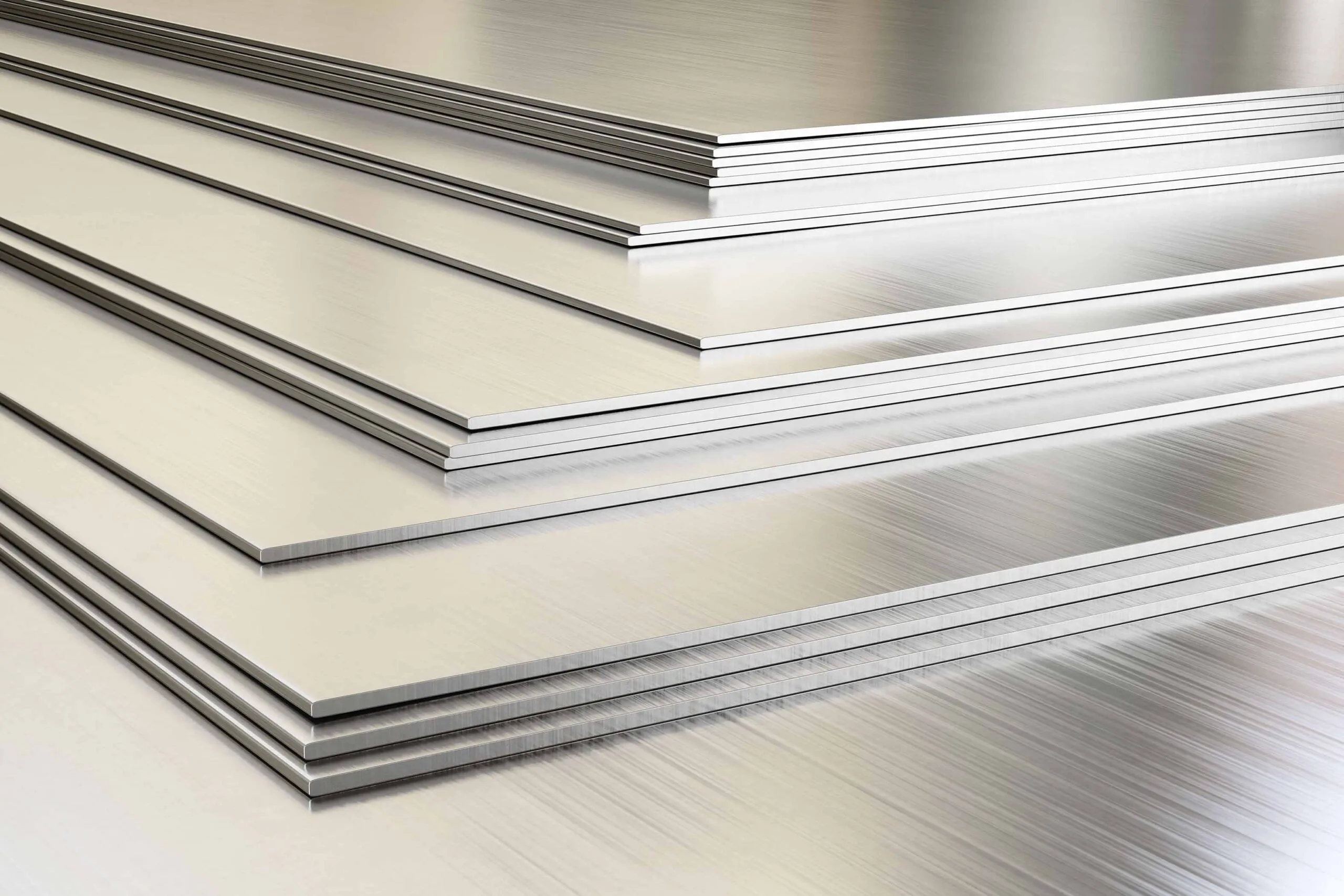
Alloy steel plate supply from Leading Top Union (领拓互联) covers a comprehensive range of chromium-molybdenum (Cr-Mo) and high-strength grades engineered for demanding pressure vessel, boiler, and structural applications. The Cr-Mo portfolio includes 15CrMo, 12Cr1MoV, and ASTM A387 Grades 11, 22, and 91, with thicknesses from 6 mm to 200 mm. These plates are produced to GB/T 713, ASTM A387, and EN 10028-2 standards, ensuring compliance with global fabrication codes. Each plate undergoes full ultrasonic testing (UT) per ASTM A578 or EN 10160, with acceptance criteria agreed upon at order placement. Delivery is provided in normalized (N), quenched and tempered (QT), or thermomechanically controlled processed (TMCP) conditions to match specific service requirements, including elevated temperature creep resistance and hydrogen service environments.
High-Strength Grade Specifications
For high-strength applications, Q460C/D/E, Q550D/E, Q690D/E per GB/T 1591, ASTM A514 Grades B, E, F, H, and S, as well as EN 10025-6 S460NL and S690QL are supplied. These plates offer yield strengths from 460 MPa to 690 MPa minimum, with Charpy V-notch impact testing at specified temperatures down to -40°C for Grades D and E, or -60°C for S690QL. Thickness capability remains 6-200 mm, with width up to 4000 mm and length up to 18000 mm, subject to mill capacity. Material test certificates (MTC) per EN 10204 Type 3.1 or 3.2 are provided, with complete traceability from heat number to final plate. Third-party inspection by SGS, Bureau Veritas, Lloyd’s Register, or TÜV is standard for critical orders.
Delivery Condition Selection
Delivery conditions are selected based on final service parameters. Normalized plates are typical for ASME Section VIII Div. 1 pressure vessels operating below 450°C, while QT plates suit higher strength demands in offshore structures and mining equipment. TMCP plates offer improved weldability and toughness for thick sections in shipbuilding and wind turbine towers. The quality management system is certified to ISO 3834-2 for welding, EN 1090-2 EXC3 for structural steel execution, and AWS D1.1 for welding procedure qualification. This ensures that alloy steel plates meet not only chemical and mechanical requirements but also fabrication readiness, including flatness tolerances per ASTM A6 or EN 10029 Class A, and surface condition suitable for immediate cutting and welding.
Dimensional Tolerances and Inspection
Strict dimensional tolerances are maintained: thickness tolerance per ASTM A6 or EN 10029, with camber and sweep within 1 mm per meter of length. For plates over 50 mm thick, ultrasonic inspection in accordance with ASTM A578 Level B or EN 10160 Class S1/E1 is offered, ensuring freedom from laminations and inclusions. Surface defects are ground and verified by magnetic particle testing (MT) per ASTM E709 or ISO 9934. Each plate is marked with heat number, grade, thickness, and inspection stamps. Certified dimensional reports and chemical analysis for every heat are provided, enabling procurement engineers to verify compliance with project specifications without additional testing.
Applications & Industries
Alloy steel plates from Leading Top Union are specified for critical components in oil and gas processing, including hydrocracker reactors, amine absorbers, and high-pressure separators. SA387 Gr.22 (2.25Cr-1Mo) plates are commonly used in hydroprocessing units operating at temperatures up to 550°C and pressures exceeding 200 bar. These plates require strict control of temper embrittlement susceptibility, with J-factor (Si+Mn) x (P+Sn) x 10^4 limited to below 150 per API 934-A. Normalized and tempered plates meet these requirements, with Charpy impact values typically exceeding 54 J at -18°C. Plates for shell courses, heads, and nozzles are supplied, with full traceability for ASME U-stamp fabrication.
Power Generation Applications
In the power generation sector, Cr-Mo plates are used for boiler drums, headers, and piping systems in coal-fired and combined cycle plants. 12Cr1MoV plates are specified for superheater and reheater components operating at metal temperatures up to 580°C, with creep rupture strength of approximately 100 MPa at 10^5 hours. For nuclear power applications, SA387 Gr.91 (9Cr-1Mo-V) plates are supplied for steam generator shells and reactor coolant system components, requiring tight control of nitrogen and aluminum content to maintain creep strength. These plates are delivered in normalized and tempered condition, with hardness testing per ASTM E10 ensuring values between 180-250 HB for optimal weldability.
Offshore Wind Energy Structures
Offshore wind energy structures demand high-strength plates with excellent low-temperature toughness. S460NL and S690QL plates are used for monopile transition pieces, jacket legs, and tower sections in North Sea projects where design temperatures reach -40°C. TMCP plates achieve yield strength of 690 MPa with Charpy V-notch impact energy of 50 J at -60°C, meeting EN 1993-1-10 requirements for thickness up to 100 mm. These plates are supplied with through-thickness Z-direction testing per EN 10164, achieving Z35 quality for lamellar tearing resistance in highly restrained welded joints. Certified mill test reports with full mechanical property data for each heat are provided, enabling fatigue design verification per DNV-RP-C203.
Mining and Marine Applications
Mining and mineral processing equipment relies on high-strength alloy plates for wear-resistant liners, truck bodies, and crusher components. Q690D and ASTM A514 Grade B plates offer Brinell hardness of 235-293 HB in the quenched and tempered condition, with yield strength of 690 MPa minimum. These plates are used in dump truck bodies where payload capacity is maximized by reducing plate thickness without sacrificing structural integrity. Plates with guaranteed flatness of 6 mm over 3000 mm length for laser cutting and robotic welding operations are supplied. For abrasive environments, plates with additional hardness testing per ASTM E10 can be provided, ensuring consistent wear performance across large production runs.
Shipbuilding and marine applications require alloy steel plates certified by classification societies including Lloyd’s Register, DNV-GL, Bureau Veritas, and ABS. High-strength plates meet Grade A, D, E, and F requirements per IACS UR W11, with impact testing at -40°C for Grade E and -60°C for Grade F. Plates for LNG carrier cargo tanks require 9% nickel steel or 5% nickel steel for cryogenic service down to -196°C. These grades are supplied with full Charpy impact testing at cryogenic temperatures, meeting EN 10028-4 or ASTM A553 requirements. Each plate is stamped with classification society approval marks and accompanied by certified material certificates.
Why Choose Leading Top Union for Alloy Steel Plate Supply
Leading Top Union operates with ISO 3834-2 certification for welding fabrication, ensuring that alloy steel plates are supplied with documented welding procedure specifications (WPS) and procedure qualification records (PQR) per AWS D1.1 and EN 1090-2 EXC3. This is critical for EPC contractors who require pre-qualified materials for pressure vessel and structural fabrication. The quality control team reviews each order against project specifications, including supplementary requirements for hydrogen-induced cracking (HIC) testing per NACE TM0284, or sulfide stress cracking (SSC) testing per NACE TM0177 for sour service applications. Detailed inspection test plans (ITP) with hold points for third-party witness are provided.
Supply Chain and Inventory Capabilities
Supply chain capabilities include direct mill sourcing from ISO 9001 certified Chinese steel mills with annual production capacity exceeding 5 million tons of alloy steel plates. Inventory of common grades and thicknesses is maintained in the Suzhou warehouse, enabling lead times of 2-4 weeks for standard orders. For project-specific requirements, mill rolling schedules are coordinated to achieve delivery within 8-12 weeks from order confirmation. Each shipment includes certified dimensional inspection reports, chemical analysis certificates, and mechanical test results. Flexible packaging options are offered including steel crates, wooden pallets, or loose bundles with protective coating for sea freight.
Technical Support and Welding Expertise
Technical support is provided by a team of welding engineers and metallurgists who assist with grade selection, heat treatment optimization, and welding procedure development. Appropriate preheat and interpass temperatures can be recommended based on carbon equivalent (CEV) calculations per EN 1011-2 or IIW formula. For example, SA387 Gr.22 plates with CEV of 0.45-0.55 require preheat of 150-200°C, while S690QL with CEV of 0.55-0.65 requires 175-225°C. Welding consumable recommendations matching parent metal properties are provided, including matching filler metals for Cr-Mo grades requiring post-weld heat treatment (PWHT) per ASME Section VIII Div. 1. Project specifications are reviewed and compliance matrices are provided to simplify procurement.
Value-Added Services and Commercial Terms
Value-added services are offered including plate cutting to net shape using plasma or laser cutting with tolerances of ±1 mm for thicknesses up to 50 mm. Edge preparation for welding, including beveling to 30°, 37.5°, or 45° angles per AWS D1.1 or EN ISO 9692, is available with surface roughness of Ra 6.3 μm. Heat treatment services including stress relieving, normalizing, and quenching and tempering can be arranged at certified facilities with furnace capacity up to 20 meters length and 4 meters width. Temperature uniformity is maintained within ±10°C per AMS 2750E Class 2 requirements. All value-added processes are documented with certified reports and traceable to original heat numbers.
Commercial terms include FOB Shanghai, CIF major global ports, or DAP delivery to project sites. Payment is accepted via T/T, L/C at sight, or irrevocable L/C with deferred payment terms for qualified buyers. Minimum order quantity is 5 metric tons per grade and thickness, with sample orders considered for qualification purposes. Complete documentation is provided including commercial invoice, packing list, bill of lading, certificate of origin, and material test certificates. For projects requiring NACE MR0103 or MR0175 compliance, plates with documented hardness testing and HIC/SSC test results can be supplied. Contact the technical sales team at sales@leadingtopunion.com for a quotation within 24 hours.