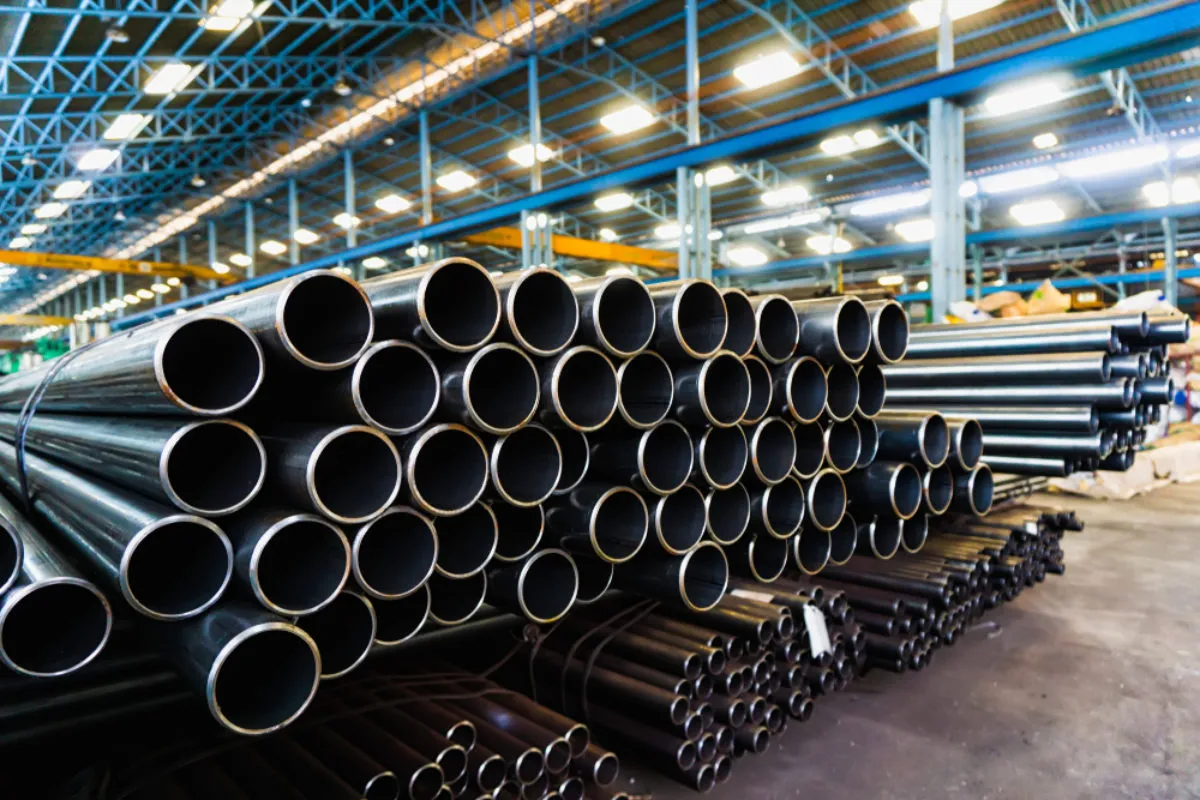
Shipbuilding Steel Plate
Classification society certified shipbuilding steel plates for hull construction, offshore structures, and marine applications. Supplied with Lloyd, DNV, BV, ABS, or CCS certification in all standard marine grades.
Classification society certified shipbuilding steel plates for hull construction, offshore structures, and marine applications. Supplied with Lloyd, DNV, BV, ABS, or CCS certification in all standard marine grades.
Mill Direct Supply
MTC Verified
Global Sourcing
Cut-to-Size Service
Shipbuilding steel plate must meet rigorous mechanical property requirements to withstand the dynamic loads, corrosive marine environments, and extreme thermal conditions encountered during vessel construction and operation. Leading Top Union supplies shipbuilding steel plate in normal strength grades A, B, D, and E, as well as high-strength grades AH32/36, DH32/36, EH32/36, and FH32/36, with thickness ranging from 6 mm to 100 mm and widths up to 3,500 mm. All plates are manufactured in accordance with classification society rules from LR, DNV, BV, ABS, CCS, NK, and KR, ensuring full traceability and compliance with IACS unified requirements. The chemical composition is tightly controlled—carbon equivalent (CEV) typically below 0.40% for weldability—and mechanical properties are verified through certified mill test certificates (EN 10204 Type 3.1 or 3.2).
For structural integrity in critical zones such as the hull, deck, and bulkheads, shipbuilding steel plate undergoes Charpy V-notch impact testing at temperatures ranging from -20°C to -60°C depending on grade. Grade E and EH36 plates, for example, are impact tested at -40°C with minimum absorbed energy of 34 J longitudinal, while FH36 achieves -60°C certification for ice-class vessels operating in Arctic waters. Through-thickness (Z-direction) testing per EN 10164 is available for plates exceeding 25 mm thickness, with Z15, Z25, or Z35 classifications to prevent lamellar tearing in highly restrained welded joints. Dimensional tolerances conform to EN 10029 Class A for thickness and EN 10029 Class AA for flatness, with camber limited to 1 mm per 1,000 mm of length. For grades requiring enhanced fatigue resistance—such as EH36 used in highly stressed hull connections—the sulfur content is restricted to a maximum of 0.005%, and non-metallic inclusion ratings per ASTM E45 Method A are controlled to below 2.0 for thin and heavy series. These measures ensure that plates subjected to cyclic loading in the 10^6 to 10^7 cycle range maintain a fatigue strength reduction factor (Kf) of less than 1.5 under as-welded conditions, a critical parameter for vessel design life of 25 to 30 years.
Delivery conditions are selected based on final application requirements: as-rolled for standard grade A and B plates in non-critical secondary structures, normalized for grade D and E plates requiring improved low-temperature toughness, and thermomechanical controlled processing (TMCP) for high-strength grades AH36 through FH36 to achieve fine-grained microstructures without post-rolling heat treatment. TMCP plates offer superior weldability with reduced preheat requirements and lower carbon equivalents, making them ideal for large block assembly sequences in modern shipyards. Production capacity supports orders from 5 metric tons for urgent repair projects to 5,000 metric tons for newbuilding programs, with lead times from 4 to 12 weeks depending on grade, thickness, and classification society survey requirements. Additional post-processing options include stress relieving at 580–620°C for plates over 50 mm thickness in highly restrained assemblies, and ultrasonic testing per ASTM A578 Level I to guarantee freedom from laminations exceeding a 3 mm diameter indication. Each plate is marked with grade, heat number, classification society stamp, and dimensional data for full traceability throughout fabrication.
Shipbuilding steel plate from Leading Top Union is specified for primary structural members in commercial vessels including bulk carriers, container ships, tankers, and LNG carriers. For example, EH36 plates with 50 mm thickness are commonly used in the bilge keel and hopper tank connections of Capesize bulk carriers, where cyclic loading from wave action demands fatigue resistance exceeding 2 million cycles per ISO 12107. In container ship construction, AH32 plates in 12–20 mm thickness form the hatch coamings and deck panels, requiring flatness tolerances within 3 mm over 2,000 mm to ensure proper container lashing system alignment. All plates are supplied with full ultrasonic testing per ASTM A578 Level I or EN 10160 Class S1/E1 to guarantee freedom from laminations and inclusions. For LNG carrier membrane tank support structures, grades with a minimum yield strength of 355 MPa and Charpy impact energy of 60 J at -60°C are specified, with plate thicknesses ranging from 20 mm to 70 mm in the invar alloy support boxes. The plates are tested for through-thickness reduction of area (Z%) per EN 10164, with Z35 classification requiring a minimum of 35% reduction in area across three specimens—a specification that ensures resistance to hydrogen-induced cracking in sour service environments.
Offshore oil and gas applications demand shipbuilding steel plate certified to both classification society rules and NORSOK M-120 requirements for material selection. DH36 plates with Z25 through-thickness properties are specified for jacket structure nodes and pile sleeve connections in North Sea platforms, where design temperatures reach -20°C and wave heights exceed 30 meters. For floating production storage and offloading (FPSO) vessels, EH36 plates in 25–60 mm thickness form the turret mooring system and cargo tank bulkheads, requiring Charpy impact values of 50 J minimum at -40°C. Plates are traceable from ladle analysis to final inspection, with each heat number recorded in the quality management system per ISO 3834-2 and EN 1090-2 EXC3 execution class requirements. In addition to standard grades, plates for topside module supports on FPSO units are supplied with controlled silicon content (0.15–0.35%) to prevent hydrogen cracking during welding, and are subject to hardness testing per ISO 6507-1 with maximum HV10 values of 350 in the heat-affected zone. For deepwater projects exceeding 1,500 meters water depth, plates with a minimum yield strength of 420 MPa and thickness up to 80 mm are produced with a fine-grained ferritic-pearlitic microstructure, achieving a grain size number of 8 or finer per ASTM E112.
In the offshore wind energy sector, shipbuilding steel plate is used for transition pieces, monopile foundations, and jacket substructures. FH36 plates with 80 mm thickness and Z35 certification are specified for the grouted connection zones of monopiles supporting 15 MW turbines, where ultimate tensile strength of 490–620 MPa and yield strength of 355 MPa minimum are required per EN 10025-4. For shipbuilding and repair yards, plates support conversion projects such as lengthening bulk carriers by inserting mid-body sections, where grade D plates with 30 mm thickness are normalized to restore toughness after welding. Plates are supplied with beveled edges per AWS D1.1 or ISO 9692-1, reducing fit-up time by up to 30% in panel line production. Each plate is marked with grade, heat number, classification society stamp, and dimensional data for full traceability throughout fabrication. For monopile foundations in the 5–8 meter diameter range, plates are supplied with a maximum ovality tolerance of 0.5% of diameter after rolling, and are subjected to 100% magnetic particle inspection of edge surfaces per ISO 17638. The plates are also tested for through-thickness ductility at the weld preparation edges, with Z35 specimens achieving a minimum reduction of area of 35% to prevent lamellar tearing during the assembly of can sections.
Leading Top Union operates an integrated production facility in Suzhou with ISO 3834-2 certification for welding coordination, EN 1090-2 EXC3 for structural steel execution, and AWS D1.1 for structural welding. Shipbuilding steel plate is sourced from approved mills with classification society type approval, and incoming inspection includes chemical analysis by optical emission spectrometry, tensile testing per ASTM A370 or EN ISO 6892-1, and Charpy impact testing per ASTM E23 or EN ISO 148-1. For each order, a comprehensive documentation package is provided including mill certificates, NDT reports, and dimensional inspection records, all reviewed by quality engineers before dispatch. The rejection rate on classification society surveys is below 0.5%, verified by third-party inspectors from LR, DNV, BV, ABS, CCS, NK, and KR. To support stringent project requirements, plates are routinely tested for hydrogen content using inert gas fusion analysis, with a maximum acceptable level of 2.0 ppm for grades intended for sour service or high-restraint welding conditions. For orders requiring fracture toughness data beyond Charpy testing, crack tip opening displacement (CTOD) values per BS 7448 can be supplied at the design temperature, with typical values exceeding 0.25 mm for EH36 and FH36 grades at -40°C.
The technical team supports procurement engineers with material selection based on design temperature, stress levels, and welding procedures. For projects requiring EN 10204 Type 3.2 certification, coordination with classification society surveyors for witnessed testing and plate marking is arranged at the facility. Inventory of common grades including AH36 and DH36 in thicknesses 10–50 mm is maintained for rapid delivery within 2–4 weeks, while custom orders for FH36 or Z35 plates are produced with 8–12 week lead times. The logistics network handles FOB Shanghai, CIF Rotterdam, or DAP delivery to major shipyards in Korea, Japan, China, and Europe, with plates packed in steel crates or wooden bundles with rust preventive coating per customer specification. Over 50,000 metric tons of shipbuilding steel plate have been supplied to 30+ countries since 2015. For large-scale newbuilding programs exceeding 10,000 metric tons, staged delivery schedules synchronized with block erection sequences are offered, including just-in-time delivery to reduce on-site storage requirements. Each shipment includes a detailed packing list with plate dimensions, weights, and traceability data mapped to the customer's material take-off (MTO) numbers, enabling direct integration into shipyard ERP systems.
Value-added services include plasma cutting to net shape with tolerances of ±1 mm per ISO 9013 Range 2, edge preparation for welding, and shot blasting to Sa 2.5 surface cleanliness per ISO 8501-1. For large block assemblies, pre-fabricated plate kits with nesting optimized to minimize scrap can be supplied—typical yield improvement of 8–12% compared to individual plate orders. The quality management system is audited annually by LRQA and DNV-GL, and ISO 9001:2015 certification is held for all processes. Contact the technical sales team at sales@leadingtopunion.com or +86-512-XXXX-XXXX with classification society requirements, thickness range, and delivery timeline for a detailed quotation and material test certificate sample. Technical inquiries are responded to within 24 hours, and free sample plates are provided for qualification welding tests. Additionally, for projects requiring finite element analysis (FEA) verification, material property data sheets including true stress-strain curves at temperatures from -60°C to +200°C can be supplied by the engineering team, enabling accurate simulation of plate behavior during fabrication and in-service loading. Cut-to-size plates with laser marking of part numbers and weld map references are also offered, reducing assembly errors and rework costs by an average of 15% in panel line production.
| Parameter | Specification |
|---|---|
| Normal Strength | Grade A, B, D, E |
| High Strength | AH32/36, DH32/36, EH32/36, FH32/36 |
| Thickness | 6 - 100mm |
| Width | Up to 3,500mm |
| Classification | LR, DNV-GL, BV, ABS, CCS, NK, KR |
| Delivery | As-rolled, Normalized, TMCP |

Send us your requirements and we will respond within 24 hours with pricing and lead time.