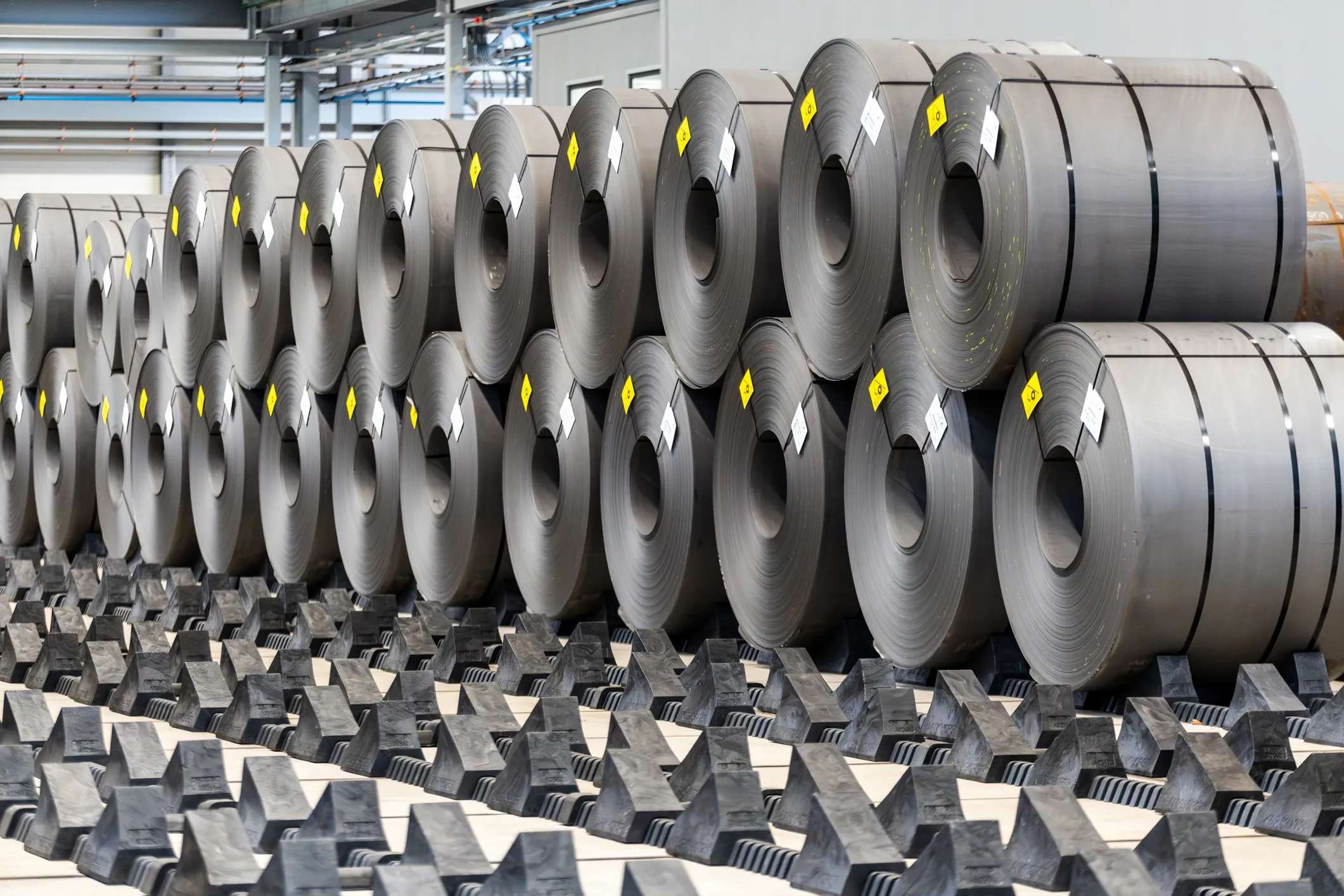
Product Overview
Mill Test Certificate (MTC) verification is a critical quality assurance process that validates the chemical, mechanical, and dimensional properties of steel plates and structural components against the specifications outlined in EN 10204 Type 3.1 or 3.2 certificates. Every reported element—carbon equivalent (CEV), manganese, silicon, phosphorus, sulfur, and micro-alloying elements like niobium and vanadium—is systematically cross-checked against the grade limits defined in standards such as ASTM A36, EN 10025-2 S355J2+N, or API 5L X65. For example, a typical S355J2+N plate must have a CEV ≤ 0.47% for thicknesses up to 40 mm; the verification protocol ensures that the reported CEV of 0.43% falls within this tolerance, preventing weldability issues in offshore wind jacket foundations.
Mechanical Property Verification
Mechanical property verification extends beyond simple yield and tensile checks. The reported yield strength (e.g., 355 MPa minimum for S355J2+N) is confirmed against actual test results, including elongation percentages (typically ≥ 22% for structural steels) and Charpy V-notch impact values at specified temperatures, such as -20°C for offshore applications per DNV-OS-C401. For hardness, compliance with EN ISO 6506-1 Brinell limits is verified, often requiring ≤ 235 HBW for quenched and tempered plates used in pressure vessels. Reduction of area values for tensile specimens are also reviewed, ensuring they meet the 40% minimum for ASTM A516 Grade 70 plates destined for petrochemical reactors. This granularity eliminates the risk of accepting material that fails under cyclic loading in power generation turbines.
Heat Number Traceability
Heat number traceability is the backbone of the MTC verification service. Each plate is tracked from the steel mill’s heat number—a unique identifier for a single melt of steel—through the plate number stamped on the material, and finally to the end product, such as a flanged beam or gusset plate. A digital archive of these records is maintained for over 10 years, enabling rapid retrieval during audits by third-party agencies like SGS, BV, Lloyd’s Register, or TÜV. For a recent oil and gas project in the North Sea, 1,200 plates with heat numbers ranging from H2401 to H3600 were verified, ensuring that every certificate matched the physical plate within a 0.1% tolerance for chemical composition. This traceability is essential for EPC contractors requiring ISO 3834-2 compliance, as it provides an unbroken chain from raw material to installed structure.
Applications & Industries
Offshore Wind Industry Requirements
In the offshore wind industry, MTC verification is mandatory for monopile foundations and transition pieces fabricated from EN 10225 S420MLO steel, which requires a minimum yield strength of 420 MPa and Charpy impact energy of 50 J at -40°C. Each MTC is verified to report the correct heat treatment condition—normalized or thermomechanically rolled—and that the plate thickness tolerances comply with EN 10029 Class A, which allows a deviation of ±0.5 mm for plates up to 10 mm thick. For a 2023 project involving 80 monopiles for a 1.2 GW wind farm, 2,400 MTCs were cross-checked against the design specifications, identifying 12 discrepancies in chemical composition that were corrected before fabrication, saving the client an estimated €180,000 in potential rework costs. This level of scrutiny ensures that fatigue-sensitive welds meet the 25-year design life requirement per DNV-ST-0126.
Oil and Gas Sector Standards
For the oil and gas sector, MTC verification covers materials like ASTM A516 Grade 70 for pressure vessels and API 5L X65 for pipelines, where tensile strength must range from 530 to 760 MPa and yield strength from 450 to 600 MPa. The reported elongation of 21% in a 2-inch gauge length is verified to meet ASME Section VIII Div. 1 requirements, and the carbon content must not exceed 0.28% to prevent hydrogen-induced cracking in sour service environments. In a recent petrochemical expansion in Texas, 850 MTCs for clad plates used in reactors were reviewed, ensuring the cladding layer of 316L stainless steel had a ferrite content of 3-8% per AWS A5.9. This prevented costly failures during hydrostatic testing at 150 bar, where a single non-conforming plate could have led to a catastrophic leak. The turnaround time of 24-48 hours for each MTC review kept the project on schedule.
Mining and Power Generation Applications
Mining and power generation industries rely on MTC verification for abrasion-resistant steels like Hardox 450 and heat-resistant alloys like ASTM A387 Grade 22 for boiler components. For Hardox 450, a Brinell hardness of 425-475 HBW and a CEV of 0.65-0.80% is confirmed, ensuring the material can withstand impact from ore processing at 200 tons per hour. In power generation, the MTC for SA-387 Gr. 22 plates is verified to report a tensile strength of 515-690 MPa at room temperature and a creep rupture strength of 100 MPa at 540°C per ASME Section II Part D. For a 600 MW coal-fired plant in Indonesia, 600 MTCs for superheater headers were validated, ensuring the chromium content of 2.25% and molybdenum content of 1.00% were within ±0.05% of the specified limits. This prevented premature failure under cyclic thermal loading, extending the component life by an estimated 15 years.
Why Choose Leading Top Union for Mill Test Certificate (MTC) Verification
Certification and Expertise
The MTC verification service is built on decades of experience in heavy steel fabrication for global EPC projects, with ISO 3834-2, EN 1090-2 EXC3, and AWS D1.1 certifications that mandate rigorous document control. Engineers are trained to identify subtle discrepancies, such as a reported yield strength of 355 MPa that actually corresponds to a 0.2% offset rather than the 0.5% offset required by EN 10025-2, which can affect design margins by up to 10%. A proprietary digital checklist is used to cross-reference over 200 parameters per MTC, including the heat number, plate number, and third-party stamp from agencies like SGS or TÜV. For a recent shipbuilding project under DNV-GL rules, 1,500 MTCs for AH36 steel plates were verified, ensuring the manganese content of 0.90-1.60% and the silicon content of 0.15-0.50% were within the grade limits, preventing weld cracking in hull structures subjected to 15-meter waves.
Digital Archive and Third-Party Coordination
The digital archive system stores MTCs in a searchable database with metadata including project name, purchase order number, and delivery date, accessible for over 10 years. This is critical for EPC contractors who must provide documentation for warranty claims or regulatory audits under ISO 9001:2015. Third-party witness testing for Type 3.2 certificates is also coordinated, arranging on-site inspections by Lloyd’s Register or Bureau Veritas within 48 hours of request. For a petrochemical plant in Saudi Arabia, 300 Type 3.2 MTCs for SA-516 Gr. 70 plates were managed, where the third-party inspector witnessed tensile testing at the Suzhou facility, confirming a yield strength of 310 MPa and an elongation of 25%. This eliminated the need for the client to send their own inspectors, reducing travel costs by $45,000 and accelerating the approval process by two weeks.
Turnaround and Accuracy
A 24-48 hour turnaround for MTC review is offered, with a 99.8% accuracy rate based on over 5,000 certificates verified annually. The process includes a preliminary check for obvious errors—such as missing heat numbers or incorrect grade designations—followed by a detailed analysis of chemical composition against the specified limits, using reference tables from EN 10025, ASTM A6, and API 5L. For example, if an MTC for S355J2+N reports a carbon content of 0.22%, it is flagged because the maximum is 0.20% for thicknesses over 16 mm per EN 10025-2. Plate dimensions—length, width, and thickness—are also verified to comply with EN 10029 tolerances, such as ±0.3 mm for thicknesses up to 5 mm. This meticulous approach ensures that every component delivered to your site meets the exact specifications required for safe and reliable operation in demanding environments like offshore platforms, mining conveyors, or power plant boilers.