Product Overview
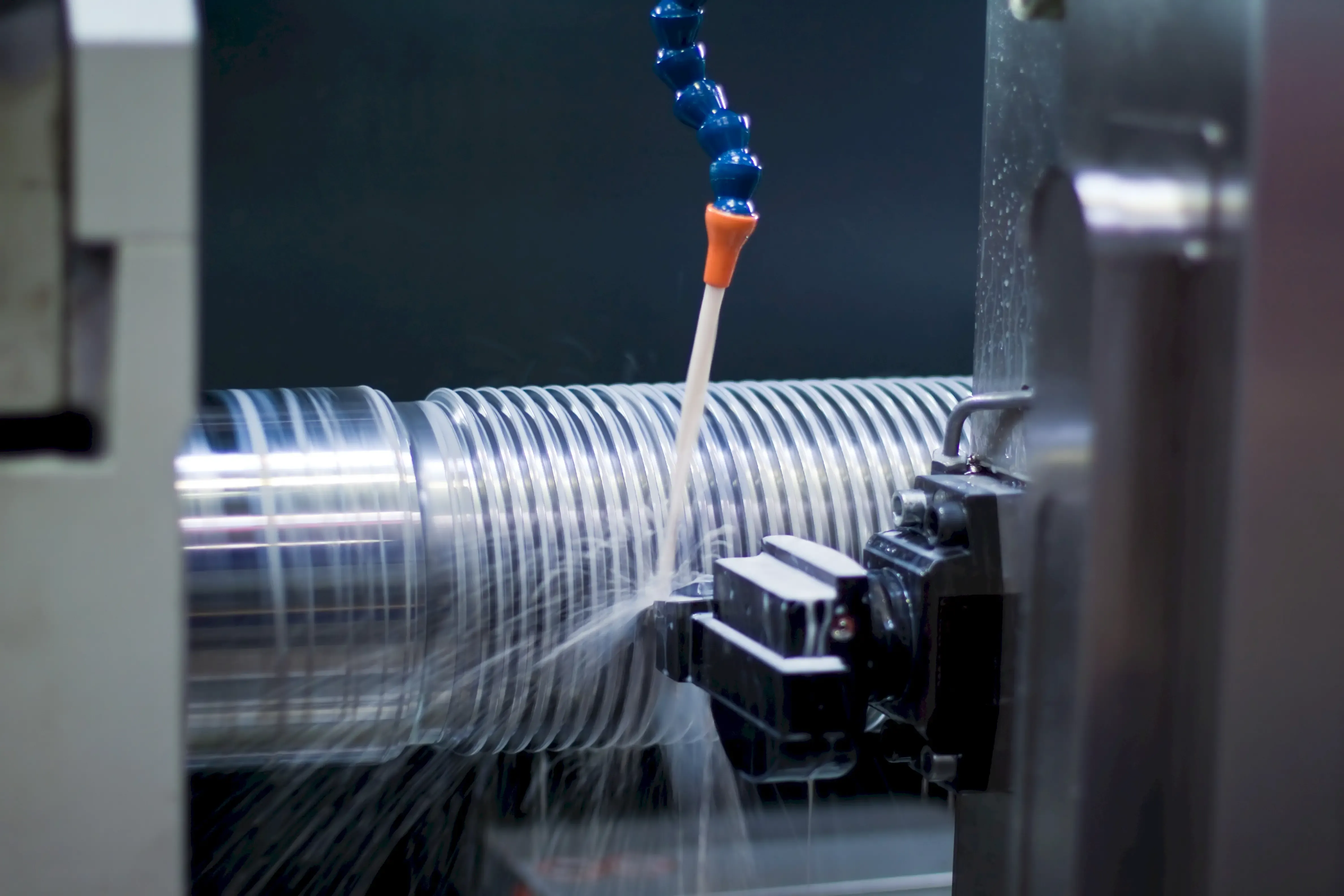
CNC turning and lathe services at Leading Top Union are engineered for precision machining of large-scale, high-stakes components used in demanding industrial environments. Our facility in Suzhou operates a comprehensive fleet of horizontal lathes with up to 12,000mm between centers and vertical turning lathes (VTLs) with a maximum swing diameter of 3,000mm. This capacity allows us to handle workpieces weighing up to 30,000 kg while maintaining a concentricity tolerance of 0.01mm TIR. All turning operations are performed under controlled shop conditions with ambient temperature regulation to minimize thermal expansion effects on large-diameter parts.
CNC turning capabilities extend beyond basic cylindrical machining to include complex multi-axis operations using live tooling for milling, drilling, and tapping in a single setup. This reduces part handling errors and shortens lead times for components requiring both rotational and non-rotational features. Surface finishes ranging from Ra 0.4 μm for sealing surfaces to Ra 3.2 μm for structural interfaces are achieved, depending on application requirements. Thread cutting covers metric, imperial, API, and custom profiles, with pitch accuracy verified using optical comparators and thread gauges to ASME B1.2 and ISO 1502 standards. For high-precision applications, such as hydraulic cylinder rods, tolerances of ±0.005mm on diameter and 0.008mm on roundness are routinely held using CBN-tipped tooling and adaptive feed rate control. The facility’s spindle runout is maintained below 0.003mm TIR through monthly calibration using laser alignment systems, ensuring repeatability across long production runs.
Material versatility is a cornerstone of our turning services. We routinely machine carbon steels (ASTM A36, A105), alloy steels (4140, 4340, 8620), stainless steels (304, 316, 17-4 PH), nickel alloys (Inconel 625, 718), and aluminum grades (6061, 7075). For heavy-wall pipe and shaft components, we employ specialized carbide and ceramic tooling geometries to maintain chip control and dimensional stability at depths of cut up to 8mm. Our quality management system, certified to ISO 3834-2 and EN 1090-2 EXC3, ensures full traceability of material heat numbers and machining parameters for every turned part. For heat-treated components, hardness testing is performed on every tenth piece using Rockwell C and Brinell methods, with results logged against batch records.
Applications & Industries
In the oil and gas sector, CNC turning services produce critical components such as valve stems, choke bodies, and drill collars that must withstand pressures exceeding 15,000 psi and temperatures from -50°C to 250°C. For subsea tree assemblies, 17-4 PH stainless steel shafts are turned with concentricity held to 0.01mm TIR to ensure reliable sealing under dynamic loading. Thread profiles for API 5B and API 7-2 connections are cut with pitch accuracy within 0.05mm over 300mm length, verified by certified thread gauges. These parts often require NACE MR0175 compliance for sour service environments, which is accommodated through controlled machining parameters and material certification. For Christmas tree valve bodies, bores are machined to a diameter tolerance of ±0.025mm with surface finishes of Ra 0.8 μm, ensuring bubble-tight sealing per API 6A PR2 testing protocols.
Offshore wind energy applications demand large-diameter turning of main shaft flanges, pitch bearing housings, and yaw drive components. VTLs handle parts up to 3,000mm swing diameter with surface finishes of Ra 1.6 μm on sealing faces to prevent lubricant leakage under high cyclic loads. For monopile transition pieces, internal bores are machined with tolerances of ±0.05mm to ensure precise fitment of grouted connections. These components are produced to DNV-GL and EN 1090-2 EXC3 standards, with full dimensional reports and material certificates provided for each batch. The ability to turn 30-ton parts in a single setup reduces weld distortion risks common in multi-process fabrication. For pitch bearing housings, the angular contact raceways are turned to a runout of 0.015mm TIR, enabling smooth rotation under 8 MW turbine loads over a 25-year design life.
Mining and power generation industries rely on heavy-duty turning for large shafts, rollers, and pulleys used in crushing mills and turbine systems. For coal-fired power plants, low-pressure turbine rotors from 3.5% nickel steel are machined with diameters up to 2,500mm and lengths exceeding 8,000mm, maintaining runout within 0.02mm TIR. In mining, trunnion shafts for ball mills are turned from 4340 alloy steel heat-treated to 32-36 HRC, operating under continuous loads of 500 tons. Live tooling capability allows simultaneous milling of keyways and drilling of bolt holes on these shafts, eliminating secondary operations and reducing total cycle time by up to 30% compared to conventional methods. For crushing mill rollers, the outer diameter is turned to a straightness of 0.01mm per meter to ensure uniform wear patterns, extending service intervals by 15% as validated through field trials.
Why Choose Leading Top Union for CNC Turning & Lathe Services
The certification portfolio directly addresses the quality requirements of global EPC firms. With ISO 3834-2 for welding integration, EN 1090-2 EXC3 for structural steel, and AWS D1.1 for weldments, a single-source solution is provided for turned components that are part of larger welded assemblies. This eliminates the need for separate supplier qualifications and reduces supply chain complexity. In-process inspections are performed using CMMs with 1.5 μm accuracy and laser interferometers for linear positioning verification on lathes, ensuring every part meets the specified tolerances before shipment. For example, on a recent order of 200 hydraulic cylinder tubes, 100% of parts were verified to have a wall thickness variation below 0.03mm, exceeding the customer’s requirement of ±0.05mm.
Engineering support is offered for complex turning projects, including toolpath optimization for difficult-to-machine materials like Inconel 718 and titanium alloys. CAM software with simulation capabilities predicts chip formation and tool wear, reducing scrap rates below 0.5% for production runs. For prototype and low-volume orders, rapid turnaround within 5-7 business days is available for parts up to 1,000mm diameter. All turned components are supplied with material test reports (MTRs), dimensional inspection certificates, and surface roughness measurements traceable to NIST standards, meeting the documentation requirements of ISO 9001:2015 and ASME B46.1. For aerospace-grade parts, additional NDT capabilities such as ultrasonic testing for subsurface defects down to 0.5mm depth and magnetic particle inspection for surface cracks are available, ensuring compliance with AMS 2644 and ASTM E1444 standards.