Product Overview
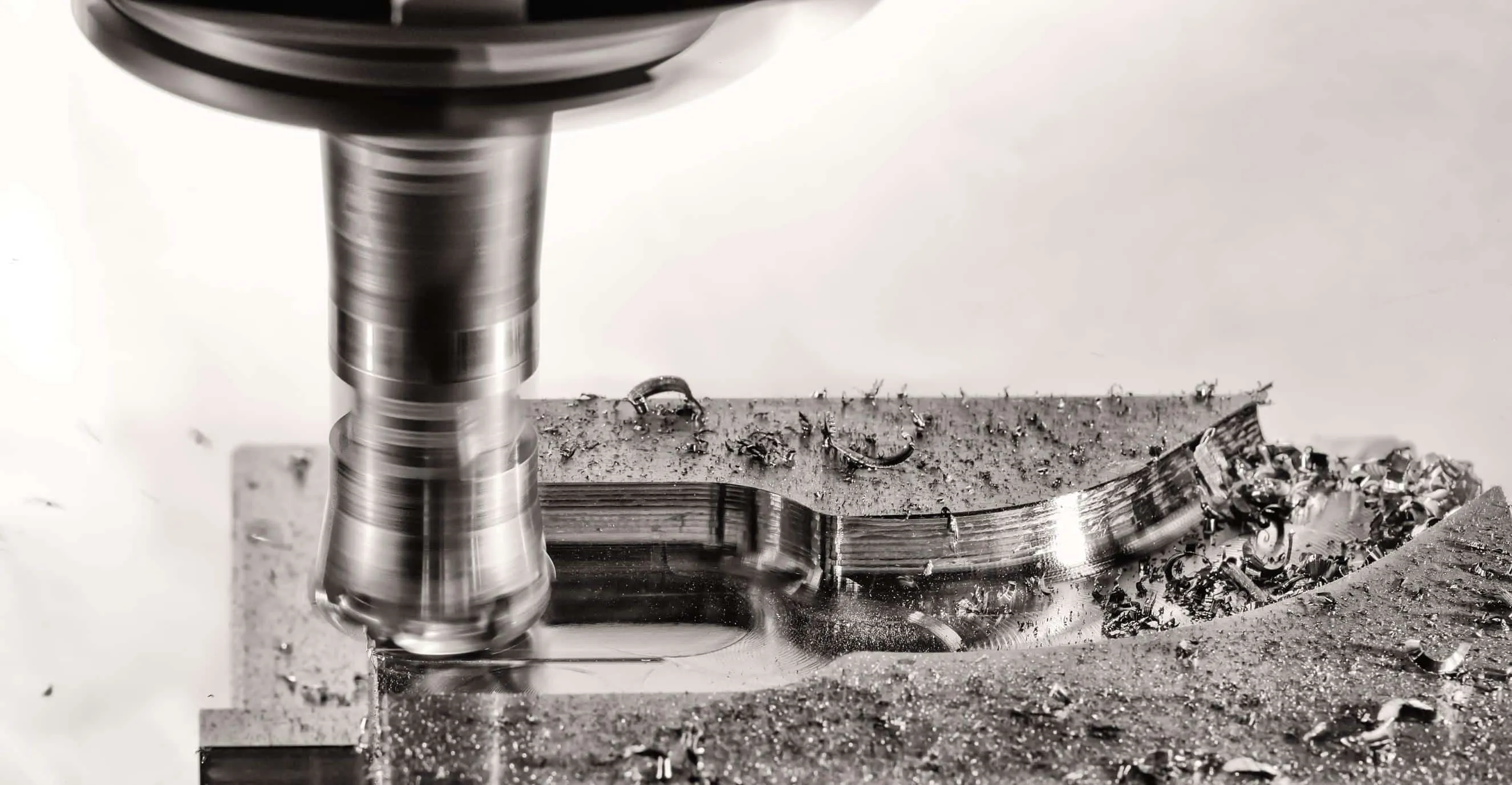
5-axis CNC machining services at Leading Top Union (领拓互联) are engineered for complex geometries requiring simultaneous multi-axis interpolation. Unlike 3+2 positioning systems, true 5-axis capability allows the cutting tool to maintain optimal orientation relative to the workpiece surface throughout the entire machining cycle. This is critical for components with undercuts, deep cavities, and freeform contours where conventional 3-axis methods would require multiple setups and specialized fixtures. The kinematic configuration of DMG MORI and Mazak machines provides full B-axis and C-axis rotation, enabling tool access from virtually any angle without repositioning the part.
Machine Construction and Thermal Stability
The technical foundation of 5-axis machining rests on rigid machine construction and advanced servo control systems. The largest machining envelope accommodates workpieces up to 4000 × 2000 × 1500mm with a maximum payload of 12,000 kg, making this one of the few ISO 3834-2 certified facilities capable of processing large-scale components for offshore wind and heavy mining equipment. The spindle delivers up to 18,000 RPM with HSK-A63 tool interface, providing the torque and speed necessary for both roughing operations in Inconel 718 and finishing passes on aluminum alloys. Thermal stability is maintained through integrated coolant systems that regulate temperature within ±1°C during extended machining cycles.
Positional Accuracy and Surface Finish Capabilities
Positional accuracy of ±0.01mm and repeatability of ±0.003mm are achieved through closed-loop feedback from linear scales and rotary encoders. These tolerances are verified using Renishaw ballbar testing and laser interferometry per ISO 230-2 standards. For critical aerospace and turbine applications, in-process probing routines automatically compensate for tool wear and thermal growth, maintaining dimensional consistency across production runs of 50 to 500 units. Surface finishes ranging from Ra 0.4 to 1.6μm are attainable depending on material and toolpath strategy, with mirror finishes possible on non-ferrous materials using specialized diamond tooling.
Material Versatility and Process Engineering
Material versatility is a key advantage of 5-axis CNC machining services. Stainless steels (304, 316L, 17-4PH), titanium alloys (Ti-6Al-4V, Ti-6Al-2Sn-4Zr-2Mo), nickel-based superalloys (Inconel 718, Hastelloy X), aluminum alloys (6061-T6, 7075-T651), and engineering plastics (PEEK, PTFE, Torlon) are routinely processed. Each material requires specific cutting parameters, tool geometries, and coolant strategies—process engineers develop customized machining plans referencing ASME B46.1 surface texture standards and ASTM material specifications. For high-temperature applications in gas turbines, strict control over residual stress and recast layer thickness is maintained, often below 0.05mm, to prevent premature component failure.
Single-Setup Advantage and Production Economics
The single-setup advantage of 5-axis machining directly impacts part quality and production economics. By eliminating multiple fixture changes and re-referencing steps, cumulative positioning errors that typically occur in sequential 3-axis operations are reduced. A typical impeller component requiring 12 separate setups on conventional equipment can be completed in a single clamping cycle, reducing lead time by 40-60% and improving geometric consistency. This approach also minimizes operator intervention, reducing the risk of human error in datum transfer. For industries governed by AS9100D or ISO 13485 quality systems, this traceable single-setup methodology provides auditable evidence of process control.
Applications & Industries
Aerospace Structural Components
In the aerospace sector, 5-axis CNC machining services produce structural components for airframes and engine systems where weight reduction and fatigue resistance are paramount. Titanium bulkheads, aluminum wing ribs, and Inconel turbine disks with complex cooling hole patterns that demand simultaneous 5-axis drilling at angles exceeding 30 degrees are manufactured. These components must conform to AS9100D quality standards and often require first-article inspection reports per AS9102. Capability to machine thin-wall sections down to 0.5mm thickness with ±0.02mm tolerance is critical for weight-sensitive applications in commercial aircraft like the Boeing 787 and Airbus A350 programs.
Oil and Gas Downhole Tooling
Oil and gas applications benefit significantly from 5-axis machining capabilities, particularly for downhole tools and valve components operating in high-pressure, high-temperature (HPHT) environments. Christmas tree components, blowout preventer (BOP) parts, and subsea connector bodies are machined from 4130 alloy steel and 17-4PH stainless steel, holding concentricity within 0.01mm over lengths exceeding 1000mm. EN 1090-2 EXC3 certification ensures traceability and mechanical property verification for pressure-containing components. For subsea applications requiring NACE MR0175/ISO 15156 compliance, strict control over hardness and sulfide stress cracking resistance is maintained through validated heat treatment and machining processes.
Turbine Component Manufacturing
Turbine component manufacturing represents a core application area for 5-axis services. Integrally bladed rotors (IBRs), nozzle guide vanes, and diffuser cases for gas and steam turbines used in power generation and marine propulsion are produced. These components require simultaneous 5-axis contouring to generate airfoil profiles with twist angles exceeding 60 degrees and leading edge radii as small as 0.2mm. Surface finish capability of Ra 0.4μm on nickel-based alloys reduces aerodynamic losses and improves turbine efficiency by up to 2%. Dimensional verification is performed using coordinate measuring machines (CMM) with scanning probes, referencing ASME Y14.5-2009 GD&T standards for profile tolerances typically specified at 0.05mm.
Offshore Wind Energy Components
The offshore wind energy industry demands large-scale precision components that 5-axis machining centers are uniquely equipped to handle. Yaw bearing housings, pitch drive components, and main shaft connectors from ductile iron and low-alloy steel castings weighing up to 12 tons are machined. These parts require tight tolerances on bolt hole patterns and mating surfaces to ensure proper load distribution in dynamic offshore conditions. ISO 3834-2 certification for welding and EN 1090-2 EXC3 for structural steel fabrication allows integration of machined components with welded assemblies, providing complete subsea module solutions. For floating wind platforms, DNV-GL compliance is maintained for fatigue-critical components subjected to 20-year design life cycles.
Medical Device Manufacturing
Medical device manufacturing uses 5-axis capability for orthopedic implants and surgical instruments requiring biocompatible materials and mirror finishes. Hip stems, knee components, and spinal implants from Ti-6Al-4V ELI and cobalt-chrome alloys per ASTM F136 and ASTM F1537 standards are machined. The 5-axis simultaneous motion allows generation of complex bone-contacting surfaces with porous structures that promote osseointegration. Surface roughness below Ra 0.2μm is achievable on articulating surfaces, reducing wear debris generation. Cleanroom-compatible machining environment and ISO 13485 quality management system ensure compliance with FDA 21 CFR Part 820 requirements for medical device manufacturers.
Why Choose Leading Top Union for 5-Axis CNC Machining Services
International Certifications and Audited Quality
Leading Top Union’s 5-axis CNC machining services are backed by multiple international certifications that directly address the quality requirements of global EPC firms. ISO 3832-2 certification for welding fabrication, EN 1090-2 EXC3 for structural steel, and AWS D1.1 for welding procedures provide auditable quality assurance for complex assemblies. These certifications are not merely administrative—they are verified through quarterly audits by TÜV SÜD and Bureau Veritas, ensuring processes consistently meet European and American standards. For procurement engineers evaluating suppliers, this certification portfolio reduces the need for extensive second-party audits, accelerating the qualification process.
Experienced Technical Team and Digital Twin Simulation
The technical team brings over 15 years of combined experience in 5-axis programming and process optimization, with specific expertise in Siemens NX and Mastercam CAM software. Custom post-processors are developed for each machine configuration to ensure collision-free toolpaths and optimal cutting conditions. For complex multi-axis operations, the entire machining cycle is simulated using Vericut software, verifying tool clearance and material removal rates before any metal is cut. This digital twin approach reduces setup time by an average of 30% and virtually eliminates scrap from programming errors. Engineers regularly attend training programs at DMG MORI and Mazak technology centers to stay current with evolving machining strategies.
In-House Quality Control and Material Verification
Quality control at Leading Top Union extends beyond dimensional inspection to include material verification and process validation. An in-house metallurgical laboratory equipped with spectrometers, hardness testers, and tensile testing machines verifies material composition and mechanical properties per ASTM E8 and ASTM E18 standards. For critical components, non-destructive testing including ultrasonic inspection per ASTM E2375 and dye penetrant inspection per ASTM E1417 is performed. All inspection results are documented in detailed reports that satisfy the traceability requirements of AS9100D and ISO 9001:2015 quality systems. This comprehensive quality infrastructure gives clients confidence in component integrity for mission-critical applications.
Global Supply Chain and Logistics Support
Supply chain and logistics capabilities are designed to support global project delivery. Strategic inventory of commonly specified materials including 316L stainless steel, 4140 alloy steel, and 6061-T6 aluminum is maintained, reducing procurement lead times by 2-3 weeks. For export orders, all documentation including certificates of origin, material test reports, and customs clearance is handled. Location in Suzhou, China, provides direct access to Shanghai Port and international air freight hubs, enabling door-to-door delivery to Europe, North America, and the Middle East within 10-14 days for air freight or 30-45 days for sea freight. Incoterms options including FOB Shanghai, CIF major ports, and DDP for qualified accounts are offered.
Cost Efficiency and Transparent Pricing
Cost efficiency in 5-axis machining is achieved through optimized toolpath strategies and reduced secondary operations. The single-setup approach eliminates the need for expensive fixtures and multiple machine transfers, reducing per-part cost by 15-25% compared to conventional 3-axis methods for complex geometries. Transparent pricing with detailed breakdowns of material costs, machining time, and inspection fees is provided, allowing procurement teams to accurately budget for their projects. For production runs exceeding 100 units, volume discounts and consignment inventory programs are offered that reduce working capital requirements. The project management team provides weekly progress reports and real-time production status through an online customer portal, ensuring complete visibility throughout the manufacturing cycle.