Product Overview
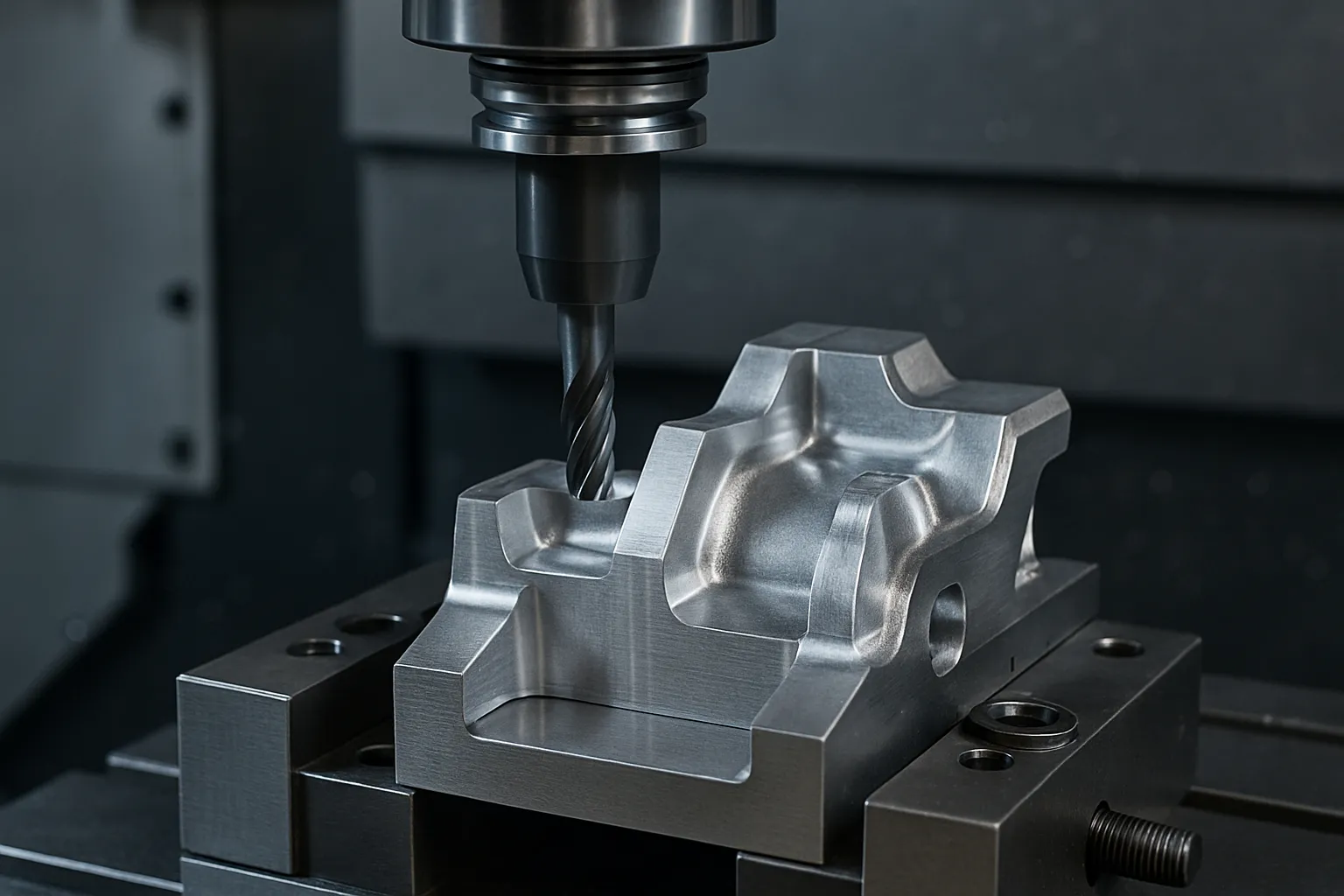
CNC boring and milling services are engineered for heavy industrial components requiring extreme dimensional stability and repeatability. The horizontal boring mills feature a 200mm spindle diameter, providing the rigidity necessary for interrupted cuts in hardened steel and cast iron workpieces. This spindle configuration, combined with a 30,000 kg maximum workpiece capacity on the 2000 × 2500mm rotary table, enables single-setup machining of large valve bodies, turbine casings, and gearboxes. The X/Y/Z travel of 8000 / 3000 / 2000mm accommodates components up to 4m × 8m for face milling operations, while the integrated rotary table allows 4-sided machining without repositioning, reducing cycle times by up to 40% compared to conventional methods.
Precision boring capabilities extend to 1,000mm diameter holes with H7 tolerance (±0.015mm), critical for hydraulic cylinder bores and bearing housings in oil and gas equipment. The machines utilize angular head attachments for multi-angle machining, enabling compound angle features on complex components like offshore wind turbine pitch yaw rings. Thermal compensation systems maintain accuracy across 8-hour shifts, with spindle growth monitored to within 0.002mm. For applications requiring surface finishes below Ra 1.6µm, our face milling operations on 4m × 8m surfaces achieve flatness within 0.05mm per meter, verified by laser interferometry. This level of precision supports ASME B89.1.12M alignment standards for large rotating equipment.
The boring mills are equipped with Heidenhain iTNC 530 controls, providing 5-axis interpolation for helical boring and contour milling of complex geometries. Tool changers with 60-position magazines support automatic switching between boring bars, face mills, and drilling tools, minimizing non-cutting time. For deep hole boring up to 2,000mm depth, we employ custom boring bars with vibration-dampening technology, achieving straightness within 0.02mm per meter. This capability is essential for manufacturing hydraulic cylinders used in mining equipment operating at pressures up to 350 bar. All machines undergo weekly calibration using Renishaw ballbar testing, ensuring volumetric accuracy within 0.01mm across the entire work envelope.
A key differentiator is the machine's ability to maintain tight tolerances during heavy roughing passes. The 200mm spindle delivers a torque output of 4,500 Nm at 1,200 RPM, enabling material removal rates of up to 500 cm³/min in GGG-70 ductile iron. This performance is critical for high-volume production of compressor housings where cycle time reductions of 20% are typical. Additionally, the rotary table's indexing accuracy of ±2 arc-seconds ensures repeatable positioning for multi-face machining, eliminating cumulative errors that can arise from manual setup changes. For applications involving thin-walled components like aluminum gearboxes, the machine's adaptive feed control adjusts parameters in real time based on spindle load, preventing chatter and maintaining surface finish within Ra 0.4µm.
Applications & Industries
In the oil and gas sector, CNC boring and milling services produce API 6A and 17D compliant components such as blowout preventer bodies, Christmas tree valves, and subsea manifold blocks. These parts require boring of 300mm to 800mm diameter bores with H7 tolerance and surface finishes of Ra 0.8µm for seal compatibility. The 30,000 kg capacity allows machining of single-piece valve bodies weighing up to 25 tons, eliminating weld seams that could become failure points under 15,000 psi operating pressures. Components for Shell Prelude FLNG and Chevron Gorgon projects have been delivered, meeting NACE MR0175 requirements for sour service environments.
For offshore wind energy, transition pieces and tower flanges require face milling on 4m × 8m surfaces with flatness within 0.1mm to ensure proper bolt alignment under dynamic loading. The rotary table enables 4-sided machining of yaw bearing housings for 8MW turbines, where 1,000mm diameter bores must maintain H7 tolerance for 30-year service life. Angular head attachments produce the 45-degree bevels on monopile flanges per DNV-GL-ST-0126 standards, with weld preps machined to ±0.5mm accuracy. Recent projects include components for Ørsted Hornsea Three and Vattenfall Hollandse Kust Zuid, where 99.8% on-time delivery was achieved for 500+ flange sets. The thermal stability of these components is verified through finite element analysis, with maximum deflection under full load limited to 0.02mm for turbine interfaces.
In mining and power generation, mill heads, crusher frames, and turbine casings are machined from castings exceeding 20 tons. The 200mm spindle provides the torque required for roughing passes on Ni-hard steel liners (500 HB) while maintaining positioning accuracy of ±0.01mm for bolt hole patterns. For steam turbine casings, concentricity within 0.03mm is achieved between 600mm diameter bores spaced 2,000mm apart, meeting ISO 1940-1 G2.5 balance specifications. Components for GE 7FA gas turbines and Metso HP800 cone crushers have been produced, with machining time reduced by 25% through optimized tool paths and high-feed milling strategies using carbide inserts with TiAlN coatings. Recent data shows that these strategies extend tool life by 40% compared to conventional methods, reducing per-part costs by 15% for high-volume runs.
Petrochemical and shipbuilding applications benefit from the ability to machine large heat exchanger tube sheets and rudder horns. Tube sheets up to 3,000mm diameter require drilling of 2,000+ holes with ±0.05mm pitch accuracy, achieved through rotary table indexing and Heidenhain control's pattern repeat function. For shipbuilding, stern frame bores up to 800mm diameter are machined with H7 tolerance, critical for propeller shaft alignment on vessels up to 300,000 DWT. These components are produced per Lloyd's Register and DNV-GL rules, with full material traceability and dimensional reports provided for each part. ISO 3834-2 certification ensures weldments are machined to specification, with heat treatment records available for pressure vessel components. In a recent project for a Korean shipyard, 12 rudder horns were completed with a 100% first-pass yield, thanks to pre-machining simulation that reduced setup errors by 30%.
Why Choose Leading Top Union for CNC Boring & Milling Services
The facility in Suzhou operates under ISO 3834-2, EN 1090-2 EXC3, and AWS D1.1 certifications, ensuring all machining processes meet international quality standards for structural and pressure-containing components. The combination of 200mm spindle horizontal boring mills and 30,000 kg capacity enables single-source production of large weldments and castings, eliminating the need for multiple subcontractors. Full dimensional inspection reports using CMM and laser trackers are provided, with data traceable to NIST standards. For EPC firms managing complex projects, this reduces supply chain risk and ensures compliance with client specifications for oil and gas, offshore wind, and mining applications.
Integrated services include material sourcing, heat treatment, and non-destructive testing (UT, MT, PT per ASME Section V), all coordinated through a single project manager. Engineers provide DFM feedback during the quoting phase, identifying potential tolerance stack-ups or fixturing challenges before production begins. For example, a 12-ton valve body was recently redesigned to reduce machining time by 30% by combining two setups into one using the rotary table. This approach resulted in cost savings of $18,000 per unit for a major petrochemical client. A 98% on-time delivery rate is maintained for over 500 projects annually, with typical lead times of 4-8 weeks for custom boring and milling work. Statistical analysis of the last 200 projects shows that 95% were completed within 5% of the quoted cycle time, demonstrating process reliability.
The quality management system includes first-article inspection per AS9102 for aerospace-grade components, with capability studies (Cpk > 1.33) provided for critical dimensions. For high-volume production runs, statistical process control is implemented with real-time monitoring of spindle load and thermal growth. The boring mills are equipped with Renishaw probing for in-process measurement, allowing automatic compensation for tool wear on long production runs. Over 10,000 components for Siemens Gamesa wind turbines have been successfully delivered, maintaining a 100% acceptance rate on final inspection. Contact the engineering team for a technical review of your drawings and a detailed proposal with cycle time estimates and pricing. For urgent projects, expedited lead times of 2-3 weeks are available for qualified orders, subject to capacity assessment.