Product Overview
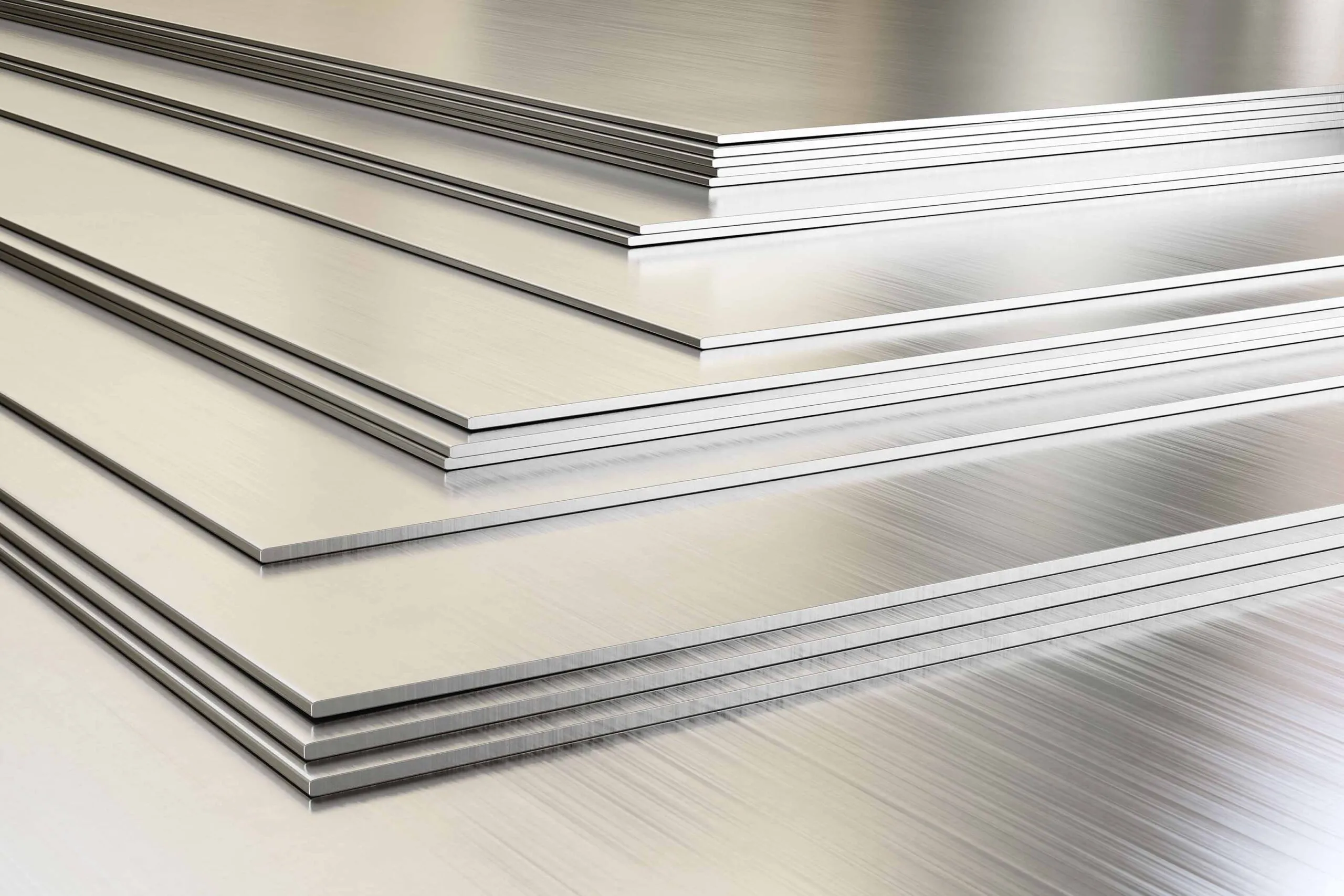
Boiler and pressure vessel steel plates must withstand sustained mechanical stress at elevated temperatures while resisting creep, corrosion, and thermal fatigue. The product range covers carbon, carbon-manganese, and low-alloy chromium-molybdenum grades designed for fired and unfired pressure equipment operating from -20°C to 600°C. SA516-70 normalized plates are supplied for moderate-temperature service up to 425°C, SA387 Gr.22 (2.25Cr-1Mo) for hydrocracker reactors and high-pressure hydrogen service, and SA537 CL2 quenched-and-tempered plates for thick-wall ammonia converters and large-diameter storage spheres. All plates conform to ASME BPVC Section II Part A and EN 10028-2/3, with guaranteed chemical composition and mechanical properties per heat analysis and product analysis.
Manufacturing Process and Chemistry Control
The manufacturing process begins with electric arc furnace melting and ladle refining to achieve tight chemistry control—for example, SA516-70 requires carbon content of 0.28% max and manganese of 0.85-1.20% for 50mm thickness. Plates undergo controlled rolling followed by normalizing at 900-950°C with air cooling, or quenching at 900-930°C followed by tempering at 620-680°C for QT grades. Yield strength at design temperature is guaranteed per ASME Section II Part D, such as SA516-70 providing 260 MPa minimum at 200°C and 185 MPa at 400°C. For EN 10028 grades like P355GH, the 0.2% proof strength at 350°C is certified at 185 MPa minimum, verified through elevated-temperature tensile testing on each heat.
Dimensional Capabilities and Inspection Standards
Thickness capability ranges from 6mm to 200mm in widths up to 3,500mm, with lengths up to 18,000mm. Plates are supplied in normalized, normalized-and-tempered, or quenched-and-tempered conditions depending on grade and thickness. For SA387 Gr.11 and Gr.22 plates above 50mm, post-weld heat treatment simulation (PWHT) coupons are applied to verify mechanical properties after thermal cycling. All plates receive 100% ultrasonic inspection per SA578 Level B or EN 10160 Class S1/E1, with acceptance criteria for laminar discontinuities limited to 3mm diameter for critical applications. Material test certificates are issued per EN 10204 Type 3.1 or 3.2, including full chemical analysis, tensile results at room and elevated temperature, Charpy V-notch impact values at specified test temperatures, and grain size per ASTM E112.
Dual-Certification and Global Grade Equivalency
For Chinese GB/T 713 grades such as Q345R and 15CrMoR, dual-certification against ASME or EN equivalents is provided to simplify global procurement. Q345R (equivalent to P355GH) offers 345 MPa minimum yield strength at room temperature and 170 MPa at 350°C, with guaranteed impact energy of 41J at -20°C. 15CrMoR (equivalent to SA387 Gr.12) provides creep resistance up to 550°C with 1.0-1.5% chromium and 0.45-0.60% molybdenum, making it suitable for steam drums and heat exchangers in coal-fired power plants. Plates can be supplied with reduced sulfur and phosphorus content below 0.010% for improved HIC resistance in sour service, and hydrogen-induced cracking testing is performed per NACE TM0284 for oil and gas applications.
Applications & Industries
Oil and Gas Sector Performance
In the oil and gas sector, SA387 Gr.22 CL2 plates are used for hydroprocessing reactors operating at 450°C and 200 bar hydrogen partial pressure, where creep rupture strength of 100 MPa at 100,000 hours is required per API 579. For liquefied natural gas (LNG) storage tanks, SA537 CL1 normalized plates are supplied in thicknesses up to 50mm with guaranteed Charpy impact energy of 27J at -40°C, meeting EN 14620 requirements for cryogenic service. These plates are also specified for spherical storage tanks for propane and butane, where the quenched-and-tempered condition in SA537 CL2 provides 415 MPa minimum yield strength, allowing wall thickness reduction of 15-20% compared to normalized grades.
Power Generation and Petrochemical Applications
Power generation applications include superheater headers and steam drums in coal-fired and combined-cycle plants. SA387 Gr.91 (9Cr-1Mo-V) plates are supplied for advanced ultra-supercritical boilers operating at 620°C and 300 bar, where the tempered martensitic microstructure provides 60 MPa creep rupture strength at 100,000 hours. For hydroelectric penstocks and surge tanks, P355NH normalized fine-grain plates are provided with guaranteed through-thickness properties per EN 10164, ensuring Z35 quality for highly stressed welded joints. In the mining industry, SA516-70 plates are used for autoclave vessels in gold and copper pressure oxidation processes, where operating temperatures of 220°C and sulfuric acid concentrations up to 50 g/L require corrosion allowance of 3-6mm.
Petrochemical and fertilizer plants rely on 13CrMo4-5 (EN 10028-2) plates for methanol reactors and ammonia synthesis converters operating at 500°C and 350 bar. The 1.0-1.5% chromium content provides oxidation resistance, while 0.45-0.60% molybdenum enhances creep strength to 80 MPa at 500°C for 100,000 hours. For urea reactors, SA516-70 with 316L stainless steel clad overlay is supplied, where the base plate thickness of 80-120mm provides structural integrity and the clad layer resists ammonium carbamate corrosion at 190°C. In the shipbuilding industry, DNV-GL certified P355GH plates are used for cargo oil tanks and inert gas scrubbers, meeting IMO requirements for fire-resistant construction with guaranteed mechanical properties after forming.
Offshore and Marine Environment Capabilities
Offshore wind energy installations use SA537 CL2 plates for transition pieces and monopile foundations, where thicknesses of 50-100mm require Charpy impact testing at -40°C per EN 1993-1-10. The quenched-and-tempered condition provides 415 MPa yield strength with 20% elongation, enabling fatigue-resistant welded connections under cyclic loading from wave and wind forces. For desalination plants, 10CrMo9-10 (EN 10028-2) plates are supplied for brine heaters operating at 120°C with chloride concentrations up to 70,000 ppm, where the 2.25% chromium content provides pitting resistance. All plates for offshore applications receive third-party inspection by DNV, Lloyds, or Bureau Veritas, with full traceability from ladle analysis to final dimensional check.
Why Choose Leading Top Union for Boiler & Pressure Vessel Steel
Certified Quality Systems and Facility Capabilities
Leading Top Union operates with ISO 3834-2 welding certification and EN 1090-2 EXC3 execution class, ensuring fabrication processes meet the highest European quality standards for welded pressure equipment. The Suzhou facility houses a 4,000-ton hydraulic press for plate forming, CNC plasma cutting with ±1mm tolerance on complex shapes, and automated submerged arc welding stations for longitudinal and circumferential seams. Separate storage areas are maintained for carbon steel and alloy steel plates to prevent cross-contamination, with each plate identified by heat number, grade, and thickness via permanent stamping and barcode tracking. The quality management system is certified to ISO 9001:2015 and PED 2014/68/EU Module H, with annual audits by TÜV SÜD and Bureau Veritas.
Comprehensive Testing and Inspection Services
A comprehensive testing package is offered that exceeds standard requirements. For every plate, tensile testing is performed at room temperature and at specified elevated temperatures up to 600°C per ASTM E21, with results reported as 0.2% proof strength and tensile strength. Charpy V-notch impact testing is conducted at temperatures from -40°C to +20°C per ASTM E23, with full transition curves provided for critical applications. Ultrasonic inspection is performed using automated C-scan systems with 5MHz probes, achieving detection sensitivity for 1.5mm flat-bottom holes per SA578 Level A. Additional testing is available including hardness mapping per ASTM E10, bend testing per ASTM E290, and grain size determination per ASTM E112, all documented in EN 10204 Type 3.1 certificates.
Engineering Support and Project Delivery
The technical team provides engineering support for material selection, including creep rupture calculations per ASME Section II Part D and fatigue analysis per ASME Section VIII Division 2. Assistance is provided with weld procedure qualification (WPQR) per ASME Section IX or ISO 15614, using test plates with the same heat treatment condition as the production plates. For projects requiring NACE MR0175/ISO 15156 compliance in sour service, plates are supplied with controlled hardness below HRC 22 and sulfide stress cracking testing per NACE TM0177. Delivery times range from 4-6 weeks for standard grades and thicknesses, with expedited production available for emergency shutdown replacements. Plates are shipped with full edge protection and moisture-resistant packaging for sea freight, ensuring arrival in specification-ready condition at ports worldwide.