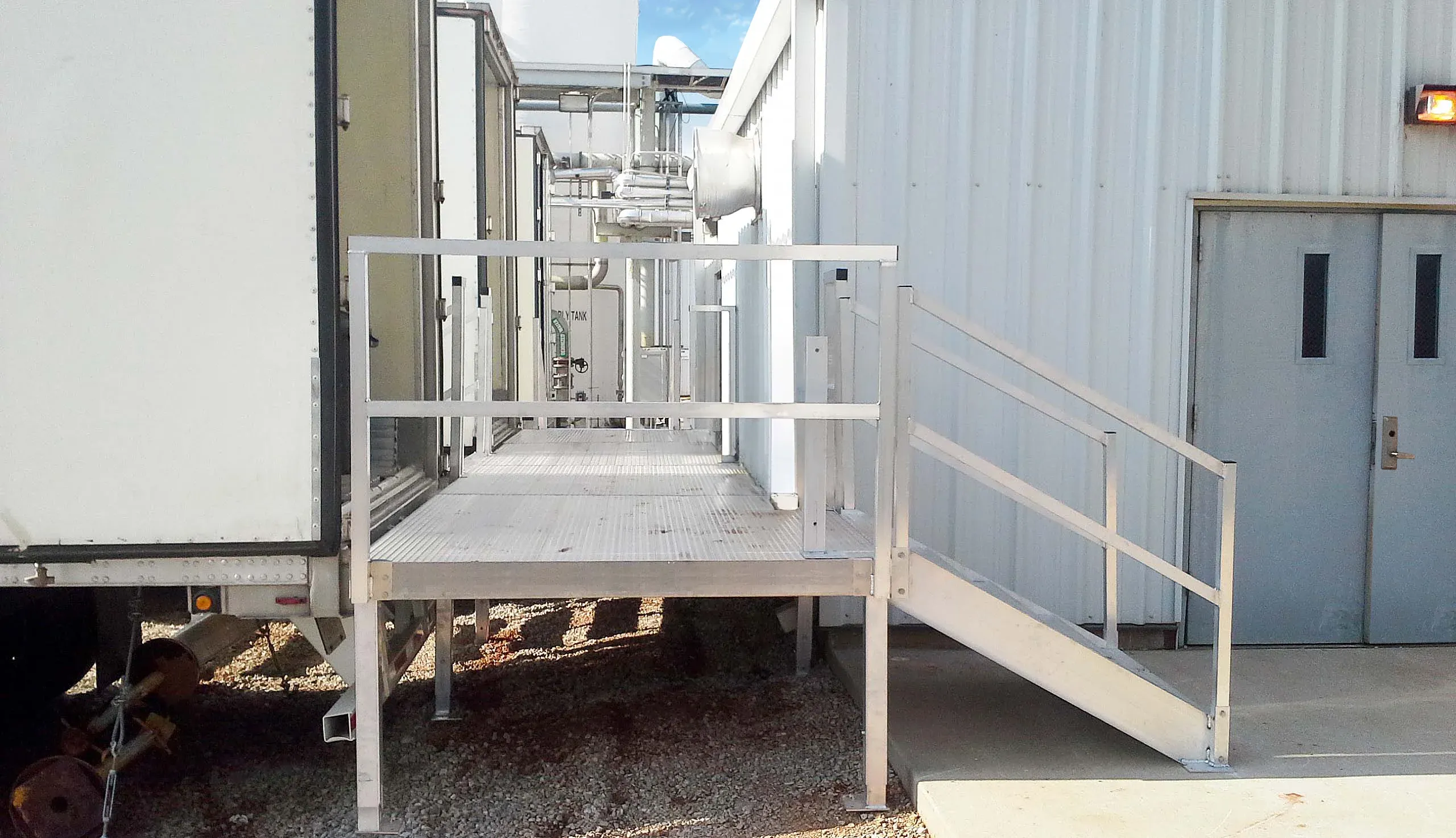
Product Overview
Grip strut grating for chemical plants is engineered to withstand aggressive corrosive environments while maintaining structural integrity under continuous exposure to acids, alkalis, and organic solvents. Select stainless steel grades including 304L, 316L, and 904L are used in manufacturing, with optional duplex stainless steel (UNS S31803/S32205) for environments with chloride concentrations exceeding 500 ppm. The diamond-shaped punched openings measure 46x16mm standard, providing 62% open area for rapid drainage of chemical spills into containment systems below, reducing slip hazards and preventing pooling that accelerates corrosion.
Anti-Slip Surface Design and Load Capacity
The anti-slip surface is achieved through a mechanically formed serrated edge on each bearing bar, delivering a coefficient of friction exceeding 0.8 when tested per ASTM F1679, even when coated with lubricating process fluids. Unlike welded gratings that create crevices where chlorides concentrate and initiate pitting corrosion, the grip strut design uses a single-piece punched construction with no weld points. This eliminates stress risers and crevice corrosion sites, extending service life in cyclic temperature environments ranging from -40°C to 400°C for stainless steel grades. Standard thickness options include 2.0mm, 2.5mm, 3.0mm, 4.0mm, and 5.0mm, with concentrated load capacities up to 500 kg at 600mm span for 3mm thickness.
Material Standards and Surface Treatments
Material selection follows ASTM A240/A240M for stainless steel plates and ASTM A36/A36M for carbon steel options. For extreme chemical environments involving sulfuric acid concentrations above 30% at elevated temperatures, Hastelloy C-276 (UNS N10276) and Monel 400 (UNS N04400) alloys are available, with lead times typically 8-12 weeks for custom orders. Surface treatments include hot-dip galvanizing per ASTM A123/A123M for carbon steel, mill finish for stainless steel, and specialized epoxy coatings for applications requiring additional chemical resistance. Each panel is laser-cut to tolerances of ±1.5mm on length and width, with hole pattern alignment maintained within ±0.5mm across the entire panel.
Manufacturing Compliance and Decontamination Features
Manufacturing process complies with ISO 3834-2 for fusion welding of metallic materials, ensuring consistent quality across all production batches. The open design facilitates easy decontamination cleaning using high-pressure wash systems operating at 200-300 bar, with no blind crevices where chemical residues can accumulate. This design feature is critical for chemical plants handling multiple product campaigns where cross-contamination must be avoided. Standard panel sizes include 240x1220mm, 300x1220mm, 400x2440mm, and 600x2440mm, with custom sizes available up to 1500x6000mm for large process areas. All panels are supplied with certified material test reports per EN 10204 Type 3.1 for stainless steel and exotic alloy orders.
Applications & Industries
In petrochemical refining, grip strut grating is installed on catalyst regeneration platforms and alkylation unit walkways where hydrofluoric acid and sulfuric acid concentrations reach 98-100% at temperatures up to 80°C. 316L stainless steel grating with 4.0mm thickness has demonstrated zero pitting after 5,000 hours of salt spray testing per ASTM B117, making it suitable for coastal refineries in the Gulf of Mexico and Middle East. The open design allows hydrocarbon vapors to dissipate, reducing fire risk in classified areas per NEC Article 500. Load capacity calculations follow ASCE 7-16 for live loads of 4.8 kN/m² on maintenance platforms, with deflection limited to L/200 per OSHA 1910.23.
Offshore and Marine Environment Performance
Offshore wind turbine foundations and substations use grip strut grating for chemical storage areas housing hydraulic fluids, lubricants, and corrosion inhibitors. Concentrated loads up to 500 kg from maintenance personnel carrying tools and replacement parts are supported, with a safety factor of 3:1 per DNV-OS-E101. Stainless steel 316L is standard for offshore installations due to its resistance to chloride-induced stress corrosion cracking in marine atmospheres with salt concentrations exceeding 35,000 ppm. The anti-slip surface maintains traction even when coated with grease or hydraulic oil, reducing slip-and-fall incidents by up to 60% compared to smooth bar grating, based on internal testing at 15-degree incline angles.
Mining and Mineral Processing Applications
Mining and mineral processing plants deploy grating on leach pad walkways and solvent extraction areas where sulfuric acid concentrations range from 10-50 g/L at pH levels below 2.0. Duplex stainless steel (UNS S32205) is specified for these applications due to its yield strength of 450 MPa minimum, allowing reduced material thickness compared to 316L while maintaining equivalent load capacity. The grating's 46x16mm diamond openings allow fine ore particles and process solutions to pass through, preventing buildup that could create localized corrosion cells. Temperature cycling from -20°C to 60°C during seasonal operation does not affect structural performance, with thermal expansion coefficients of 16.5 µm/m°C for stainless steel accommodated by standard expansion gaps of 10mm per 6 meters of grating run.
Power Generation and FGD System Platforms
Power generation facilities, including coal-fired and combined-cycle plants, use grip strut grating for flue gas desulfurization (FGD) system platforms where gypsum slurry and sulfuric acid mist are present at temperatures up to 120°C. 904L stainless steel grating (UNS N08904) resists pitting in environments with chloride concentrations up to 2,000 ppm and pH levels as low as 1.5, meeting requirements for wet scrubber applications. The grating is designed for uniform distributed loads of 7.5 kN/m² per EN 1991-1-1, with bearing bar spacing optimized to prevent tool drops through the openings. Each panel is marked with material grade, heat number, and load rating for traceability per ISO 9001:2015 requirements.
Why Choose Leading Top Union for Grip Strut Grating for Chemical Plants
Leading Top Union holds ISO 3834-2 certification for fusion welding, EN 1090-2 EXC3 for structural steel components, and AWS D1.1 for welding procedure specifications, ensuring grip strut grating meets the most stringent international quality standards for chemical plant applications. In-house testing laboratory performs tensile testing per ASTM E8, hardness testing per ASTM E18, and chemical composition analysis using optical emission spectrometry for every production batch. Certified material test reports per EN 10204 Type 3.1 are provided for all stainless steel and exotic alloy orders, with full traceability from mill source to finished product. This documentation is critical for EPC contractors requiring compliance with project-specific quality plans.
Manufacturing Precision and Inventory Capabilities
Manufacturing facility in Suzhou operates with CNC laser cutting equipment achieving tolerances of ±0.5mm on hole patterns and ±1.5mm on overall panel dimensions, exceeding the ±3mm industry standard for grating products. An inventory of 500+ metric tons of stainless steel coils in grades 304L, 316L, and 904L is maintained, enabling lead times of 2-4 weeks for standard sizes and 4-6 weeks for custom configurations. For urgent shutdown maintenance projects, expedited production with 10-day turnaround on quantities up to 500 square meters is offered. All grating is packaged with edge protectors and moisture barrier wrapping for export shipments, meeting ISPM 15 heat treatment requirements for wooden crating.
Engineering Support and Custom Design Services
Engineering support for load calculations and material selection based on specific chemical environments is provided, referencing NACE MR0175/ISO 15156 for sulfide stress cracking resistance in sour service. Optimal thickness and alloy combinations can be recommended based on operating temperature, chemical concentration, and required service life, typically 20-30 years for stainless steel in properly selected applications. Free sample panels for customer testing are offered, with standard samples measuring 300x300mm in 3.0mm thickness. Custom hole patterns and opening sizes are available for specialized applications, with tooling setup costs starting at $500 per pattern. All custom designs are validated using finite element analysis per ASME BPVC Section VIII Div. 2.
Quality Management and Global Export Experience
Quality management system is certified to ISO 9001:2015, with annual surveillance audits conducted by TÜV Rheinland. A non-conformance rate below 0.5% is maintained based on 2023 production data of 15,000 square meters of grating. For international projects, full documentation packages including material certificates, welding procedure specifications (WPS), welder performance qualifications (WPQ), and dimensional inspection reports are provided. Export experience spans 40+ countries, with shipping documentation compliant with Incoterms 2020 and customs requirements for chemical plant equipment. On-site installation supervision for complex projects is offered, with engineers available for site visits within 72 hours for emergency support.