Product Overview
Offshore structures operating in marine environments face continuous exposure to chlorides, UV radiation, and cyclic wet-dry conditions that accelerate corrosion rates. Offshore coating and corrosion protection systems from Leading Top Union are engineered to meet the stringent requirements of ISO 12944-9 for C5-M (very high corrosivity, marine) environments. Multi-layer coating systems are implemented with a minimum dry film thickness (DFT) of 320μm for atmospheric zones and 450μm for splash zone applications. Climate-controlled coating halls maintain temperature between 18-25°C and relative humidity below 50% during application, ensuring optimal curing conditions for epoxy and polyurethane topcoats. Surface preparation follows ISO 8501-1 Sa 2.5 for atmospheric zones and Sa 3 for immersion and splash zones, with surface profile depth maintained between 75-125μm per ISO 8503-2 to ensure mechanical adhesion.
Splash Zone Protection Systems
For splash zone protection where cathodic protection is ineffective above the tidal range, Thermal Spray Aluminum (TSA) is applied at thicknesses of 200-350μm per NORSOK M-501 and DNV-RP-B401. TSA provides sacrificial protection through aluminum oxidation, with a service life exceeding 25 years in North Sea conditions. Automated blast cleaning equipment achieves consistent surface cleanliness and profile across components up to 40 meters in length, with integrated dust collection systems maintaining air quality below 2 mg/m³ per OSHA standards. Coatings are applied using airless spray equipment at 250-350 bar pressure, with automated robotic arms for repetitive geometries to ensure uniform DFT distribution within ±15μm tolerance. Each coating layer undergoes non-destructive testing using Elcometer 456 DFT gauges calibrated per SSPC-PA 2, with holiday detection at 67.5 volts per ASTM G62 for dielectric integrity verification.
Cathodic Protection Design and Testing
Cathodic protection design integrates impressed current and sacrificial anode systems per DNV-RP-B401, with aluminum-zinc-indium anodes sized for 25-year design life in seawater resistivity ranges of 0.2-0.3 ohm-meters. Anode mass requirements are calculated based on current density demands of 0.1-0.15 A/m² for bare steel and 0.01-0.02 A/m² for coated surfaces in tropical waters. For jacket structures and subsea manifolds, anode arrays are designed with 3-5 meter spacing to achieve uniform potential distribution between -800 mV and -1050 mV vs Ag/AgCl reference electrode. Coating systems undergo accelerated weathering testing per ASTM B117 for 4,000 hours salt spray resistance and ASTM D5894 for cyclic corrosion testing, with no blistering or creepage beyond 2mm from scribe marks. Cathodic disbondment testing is also performed per ASTM G8 at 1.5V polarization for 90 days, maintaining disbondment radii under 8mm.
Applications & Industries
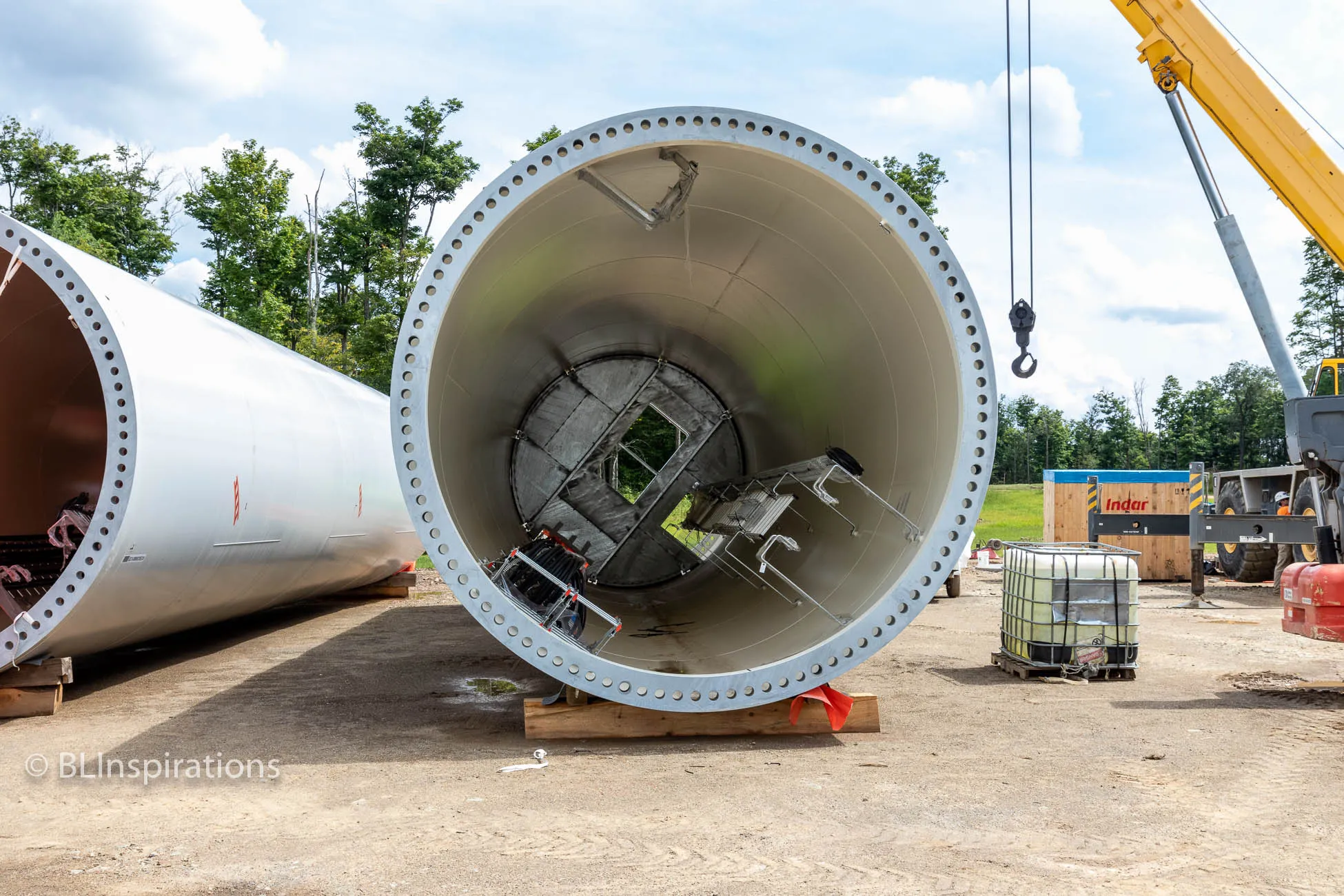
In offshore wind energy, corrosion protection systems are deployed on monopile foundations, transition pieces, and turbine towers operating in water depths of 20-60 meters. For jacket structures in the North Sea, C5-M coating systems are applied with 450μm DFT in splash zones combined with TSA at 300μm thickness for the tidal zone, achieving 30-year design life per DNV-OS-J101. Coating systems have been supplied for 8 MW turbine foundations where the splash zone extends 6-12 meters above mean sea level, requiring careful DFT control on complex geometries like boat landings and J-tubes. Climate-controlled facilities enable year-round application regardless of ambient conditions, critical for projects in the Baltic Sea where winter temperatures drop to -20°C and humidity exceeds 80% for six months annually.
Oil and Gas Platform Requirements
For oil and gas production platforms in the Gulf of Thailand and South China Sea, coating systems are provided rated for continuous service at 120°C on topside piping and 80°C on subsea equipment. These systems meet NACE TM0170 for hot water immersion resistance and NACE TM0184 for sour service environments with H2S concentrations up to 15%. Glass flake reinforced epoxy coatings are applied at 600-800μm DFT for internal piping carrying produced water at 90°C and 50 bar pressure, with abrasion resistance tested per ASTM D4060 using CS-17 wheels at 1,000 gram load showing weight loss under 100 mg per 1,000 cycles. For FPSO topside modules, three-coat systems are implemented: zinc-rich epoxy primer at 75μm, high-build epoxy intermediate at 200μm, and polyurethane topcoat at 80μm, achieving total DFT of 355μm per NORSOK M-501 system 1.
Mining and Power Generation Applications
In mining and mineral processing, offshore-grade coating systems protect slurry pipelines, thickener tanks, and flotation cells operating in acidic environments with pH 2-4 and abrasive solids content up to 40% by weight. Polyurethane and epoxy lining systems are applied at 1,500-2,500μm DFT for abrasion resistance, with Taber abrasion index values below 50 mg loss per 1,000 cycles per ASTM D4060. For power generation plants in coastal locations, these systems protect seawater intake pipes, condenser water boxes, and cooling water discharge structures exposed to chlorinated seawater at 35°C. Coating systems are designed for concrete surfaces using epoxy mortars at 3-5mm thickness per ACI 546.3R, with bond strength exceeding 2.5 MPa per ASTM D4541. These systems have been specified for desalination plants in the Middle East where brine discharge temperatures reach 45°C and salinity exceeds 60,000 ppm TDS.
Why Choose Leading Top Union for Offshore Coating & Corrosion Protection
A dedicated 5,000 m² climate-controlled coating facility is operated in Suzhou, equipped with six automated blast rooms and four spray booths capable of handling components up to 40 meters long, 6 meters wide, and 8 meters tall. This facility maintains temperature at 20±3°C and relative humidity below 45% year-round, enabling application of moisture-cure urethanes and high-solids epoxies without dew point condensation risks. ISO 3834-2 certification is held for welding quality management, EN 1090-2 EXC3 for structural steel fabrication, and AWS D1.1 for welding procedures, ensuring seamless integration of coating operations with structural fabrication. The quality management system is certified to ISO 9001:2015, with coating inspection procedures documented per ISO 12944-8 and NORSOK M-501.
Inspection and Quality Control
The team includes NACE Level 3 coating inspectors and FROSIO Level 3 inspectors who supervise all surface preparation and coating application activities. Calibration records are maintained for all inspection equipment traceable to national standards, with DFT gauges calibrated every 12 months per SSPC-PA 2 and adhesion testers calibrated per ASTM D4541. For each project, a detailed coating specification document is provided including surface preparation standards, application parameters, cure schedules, and inspection hold points. The quality control plan includes 100% visual inspection per ISO 8501-1, DFT measurement at 5 points per 10 m² per SSPC-PA 2, and adhesion testing per ASTM D4541 at a frequency of 1 test per 100 m². Salt contamination testing is also performed per ISO 8502-6 using Bresle patches, maintaining soluble salt levels below 20 mg/m² before coating application.
Warranty and Technical Support
Extended warranties of 15-25 years are offered on coating systems based on environmental exposure categories, with annual inspection reports documenting coating condition, DFT retention, and cathodic protection potential readings. Technical support includes finite element analysis for cathodic protection current distribution on complex geometries, anode sizing calculations per DNV-RP-B401, and coating system selection based on operating temperature, chemical exposure, and mechanical loading. Stock agreements are maintained with major coating manufacturers including Jotun, Hempel, and International Paint, ensuring consistent material supply and batch traceability. For EPC contractors, pre-qualification documentation is provided including coating system test reports, application procedure specifications, and quality control manuals, reducing project approval cycles by 4-6 weeks. The facility is located within 80 km of Shanghai Port, enabling direct container loading for global shipment with typical lead times of 8-12 weeks for coating application on fabricated structures.